
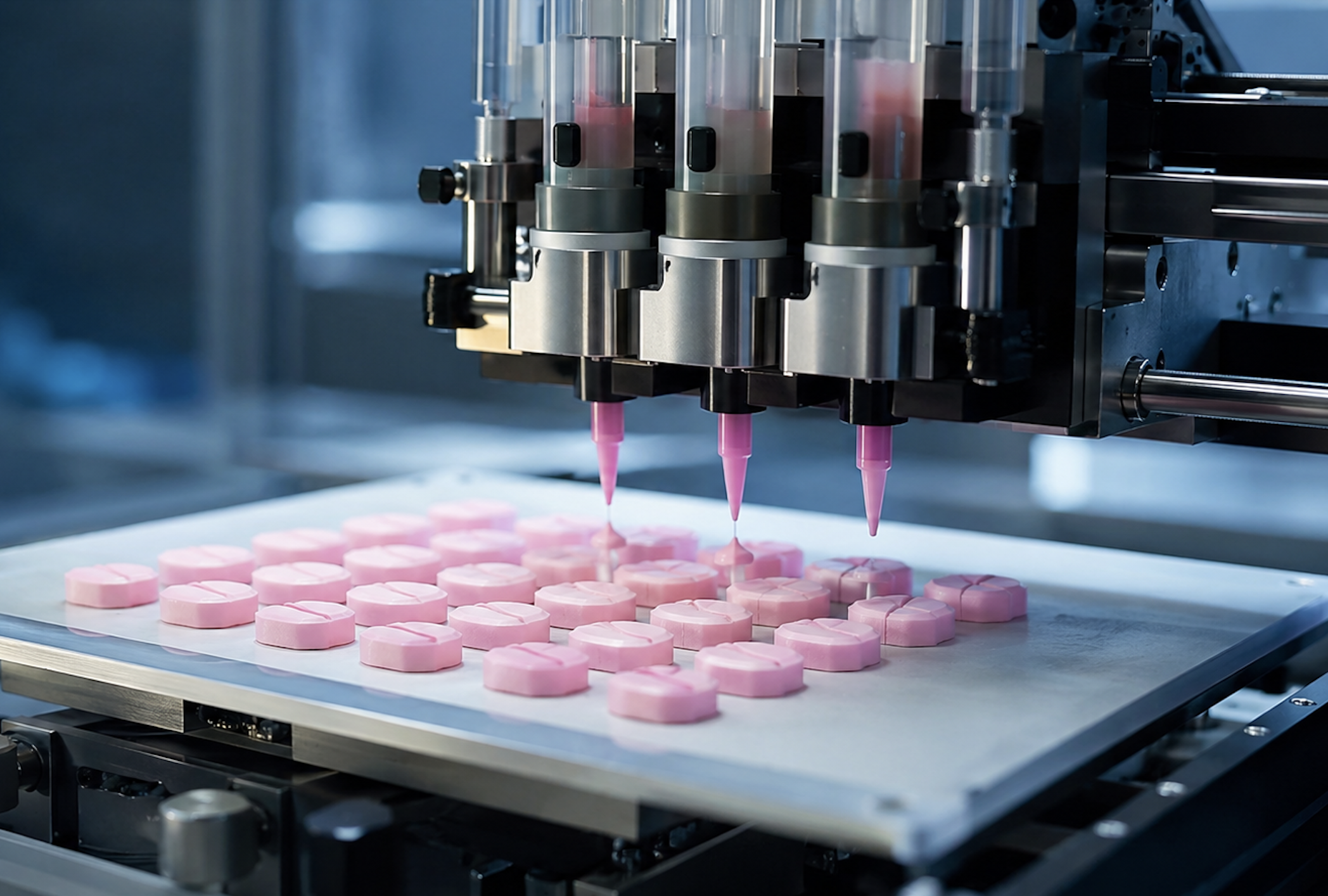
The European Medicines Agency (EMA) has published a new Q&A guideline focused on GMP and quality aspects related to 3D printing in pharmaceutical manufacturing. Released in mid-March, the document applies to human and veterinary medicines as well as investigational products, highlighting the growing role of additive manufacturing technologies in the healthcare sector.
According to EMA, 3D printing — also referred to as additive manufacturing — is an umbrella term covering different techniques used to create solid structures through the sequential deposition of layers of suitable materials. The technology is increasingly being explored for the production of personalised pharmaceutical dosage forms.
Focus on quality-by-design and process validation
Among the main advantages of additive manufacturing, the guideline highlights the possibility of tailoring dosages, combining multiple active ingredients and customising the shape and colour of tablets. These features could improve usability and treatment adherence, particularly for paediatric and geriatric patients.
The EMA document adopts a quality-by-design approach across the entire production cycle. It discusses the selection of the most appropriate printing technology according to the characteristics of the active pharmaceutical ingredient (API), including solubility, degradation profile and biopharmaceutical classification.
The guideline also examines all factors that may affect the final quality of the medicinal product, such as rheological properties, physical state of the API, particle size, compatibility with excipients and stability, including aspects linked to printing temperatures. Additional attention is given to the properties of the so-called “pharmaceutical ink” and to process validation requirements.


