Home Authors Posts by Cristiana Bernini

Cristiana Bernini

307 POSTS 0 COMMENTS

The import of food supplements and herbal products

0

Many raw materials used to produce food supplements and herbal products, as well as many of the final products, are imported in the European Union from extra-EU countries. They are subjected to dedicated custom procedures at their arrival at the Italian border, including the control of the safety for health and of the compliance to the relevant European regulations applicable to these type of products. The USMAF offices, which are located at the main ports and airports at the Italian borders, are peripheral offices of the Italian Ministry oh Health and are in charged of the controls.

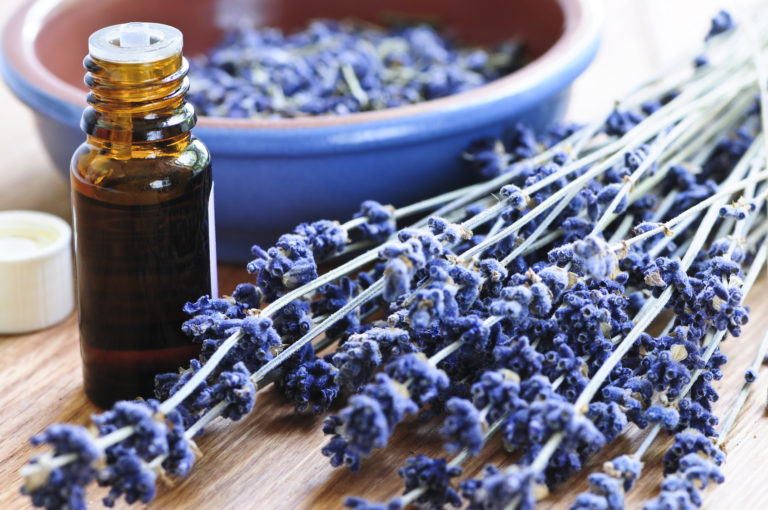
Lavender herb and essential oil

The relevant procedure which applies to imported food supplements and herbal products is the standard operative procedure called POS 11 – “Rilascio N.O.S./DCE sull’importazione di alimenti di origine non animale”. The procedure entered into force on January 1°, 2008 and it is regularly updated. It defines in detail the activities USMAF have to perform to comply to Regulation EC n. 882/2004 “on official controls performed to ensure the verification of compliance with feed and food law, animal health and animal welfare rules”.

The different USMAF offices can also issue local operative procedures in order to better reflect the peculiar characteristics of the territories they are in charged of. Furthermore, a specific operative procedure has been issued by the Ministry of Health to regulate the import of food supplements and herbal products for personal use.

The products subjected to controls

POS 11 applies to all vegetal food products and to those of not animal origin, as well as dietetic products, special foods for particular use and materials at contact with food. The procedure applies to both raw materials and final products imported for commercial use.

Barbra Bucci, Usmaf Milano

«Import procedures are the same for food, food supplements and herbal substances. For packaged products, labelling shall comply with the relevant regulations. Food supplements must be notified in advance to the Ministry of Health and must be included in the official Registry of Food Supplements. Should they not be included in the positive list and in the case they do not report on labelling the number of authorisation received by the Ministry, they are not entitled to enter the market. This is a significant difference compared to normal foods», explains Barbra Bucci, responsible for the Milan Malpensa unit of USMAF Malpensa.


The Italian Registry of Food Supplements

According to D.Lgs. n. 169/2004, after the positive conclusion of the Ministry of Health’s authorisation procedure for a food supplement, the product must be notified to the Italian Registry of Food Supplements, which is managed by the Ministry itself.

A specific single numeric code (i.e. “2031”) is assigned to each product. The previous alpha-numeric code can be used until complete disposal of already-printed labels.

The registration number has to be included on the labelling.

Ministry of Health

Food products for not human use, such as samples for laboratory use or production validation, are exempted from the import controls. «A simple notification is needed: the importer has to insert relevant data for samples into a dedicated section of the NSIS informatics system of the Ministry of Health, through which all import procedures and the issuing of NOS (nulla osta sanitario) are managed», adds Barbra Bucci. The importer declares through the NSIS system that the food supplement would not be commercialised, specifying its intend use. In the case the product should not be completely used for the tests, it should be destroyed at the end of the activity, or it should be re-exported.

Controls at borders

The documental checking on the identity of the product and the materials used is the first step in controls. Samples might be also collected for analysis according to article 15 of Regulation n. 882/2004. Upon the positive completion of the import procedure, a DCE (Common Entry Document – Documento Comune di Entrata) is issued through the NSIS system. This certification is valid all around Europe.

The Common Entry Document (DCE)

The DCE/NOS is issued upon positive closure of the official controls on foods of not animal origin imported from extra-EU countries.

The document is used by all USMAF/UT offices for those products not subjected to EU Regulations n. 669/09 -1151/09 – 1152/09 – 1135/09; for products included in such Regulations, the DCE can be issued only by the Designated Entry Points (PED)

Ministry of Health, POS 11 USMAF/DGSAN “Rilascio N.O.S./DCE sull’importazione di alimenti di origine non animale”

The documental checking applies to all goods entering the Italian border. Further analytical controls and inspections might be put in place according to the characteristic of the single product, the outcome of the documental control or the issue of specific European alerts or control plans.

«USMAF offices are member of the European RASFF network, in charged of the real time notification of direct and indirect risks for public health due to consumption of food and animal feed. For example, we receive alerts relative to undeclared radiation, the presence of prohibited substances or the missing of statements in labelling – tells Bucci.– Food supplements marketed as slimming aids, for example, might contain pharmacological active substances such as sibutramine. At the Milan Malpensa USMAF office the import of food supplements for commercial use is quite uncommon, while more frequent is those of raw materials for the production of food supplements or herbal products. At Linate and Malpensa airports we also perform many controls of goods imported for personal use: a potentially problematic practice, due to the big quantities of goods Italians buy on the web, often believing the website is a national one just because it is written in Italian. Unfortunately, in almost all cases they are foreign products, often not compliant to European regulations. For example, hormones and other pharmacologically active substances might be present in products imported from the U.S., where this sort of substances are freely commercialised».

The importer has also to attach to the documentation the copy of the invoice, of the shipping document and of the analytical certificates for raw materials, or of the labelling for finished products, as well as the number of the product in the Registry of Food Supplements. USMAF officers check the correspondence of the declared Registry number with that present in the database. The lacking of such registration, or issues with labelling of the products, are the problems more frequently encountered in the import of food supplements and herbal products. The translation in Italian of the label, for example, might be absent or incomplete, or unauthorised health claims might be present.

Analytical controls

USMAF offices may run analytical controls on imported goods according to the level of risk: among the more frequent ones are microbiological assays, the presence of heavy metals or other substances contamination, or radiation treatment. Analysis are run by the official public network of Public Health laboratories.

«Vegetal raw materials are often analysed – tells Barbra Bucci – as they require a microbiological control to check for the absence of bacterial contamination, the humidity percentage, the ashes and other analytical parameters such as density, usually indicated into the technical documentation of the product».

In case of uncompliance, if the labelling is incomplete for example, the importer may regularise it directly at the border of, should this not be possible, at the final destination keeping the goods under health restriction. Should prohibited substances be present, the product is not admitted in Italy and it should be destroyed or shipped back. «Notice of the incompliance is transmitted to all USMAF offices and to the national coordination point of the RASFF network, which is responsible to decide whoever to rise an European alert», adds Bucci.

Bordeline products

Borderline products are not easily located into a specific category, such as for example food supplements containing substances that might give a pharmacological effect. It may thus be difficult to identify the relevant regulation which should apply to their import. European legislation is the first choice to be applied; if missing, the national legislation applies.

The Belfrit positive lists of substances for herbal products now help USMAF officers to check for substances authorised in Italy for the production of food supplements and herbal products.

The Belfrit lists

The Belfrit project was started by the health authorities of Belgium, France and Italy in order to fill a common list of herbal substances and botanicals which can be used for food supplements. National lists have been revised upon recent scientific evidence. The final Blefrit list can be updated with insertion of new plants currently not yet present, but authorised in at least one of the three countries.

In Italy, the D.Lgs. 9 July 2012 and the D. Lgs. 27 March 2014 regulate the transition phase allowing for the use of plants which are included in the Belfrit list but “new” for Italy and, conversely, of those present in the Italian list only. Until the final approval of the definitive Belfrit list, both attachments n. 1 and n. 1bis can be used.

Ministry of Health

Some borderline products are produced within Europe, thus they can freely be marketed. An issue can rise as they might be classified in different ways in different European countries. «If the European Community is not able to reach a common position, national laws are valid. We are happy about the issuing of the Belfrit lists: Italy, France and Belgium are now using the same criteria. The importer might face the need to use different procedures to import the product into different European countries», concludes Barbra Bucci.
Risk assessment becomes more stringent

The EU Risk Assessment Guidelines for Excipients (2015/C 95/02) has been issued in March 2015 in order to track and control the safety and quality of pharmaceutical excipients during the entire life cycle of a medicinal product. The guideline will come into force on March 21, 2016: by this date, all pharmaceutical companies holding marketing authorisations have to close and document the risk analysis on excipients used to manufacture their products.

Should the identified risk level be too high, the producers have also to implement corrective actions in order to decrease it to acceptable levels. The 2015/C 95/02 guideline represents an extension to excipients of GMPs and GDPs criteria already in use to monitor the life cycle of pharmaceutical active ingredients and of the finished medicinal products.

Risk

The history of the new guideline

Vincenzo Rialdi, Federchimica
Vincenzo Rialdi

«We need to start from an hystorical premise: some years ago authorities tried to introduce the concept that pharmaceutical’s GMPs should have applied to anything related to the manufacturing of a medicinal products, included the excipients. Pharmaceutical’s GMPs are very restrictive and have a different purpose, the suppliers of excipients wouldn’t had been able to assure full compliance. Upon negotiations, MAPIC – Federchimica obtained that the manufacturer of the finished product is the sole responsible to verify the appropriateness of the excipients and of their suppliers» tells past-president of MAPIC – Federchimica, Vincenzo Rialdi. The Group is part of the Italian Association of raw materials and excipients manufacturers for the cosmetics and pharmaceutical industry.

The first draft of the guideline was released two years ago for public consultation. Its final version differs in some points from the draft one and it adopts the base concepts of risk assessment already used for other European Regulations. «The guideline strictly follows the general framework adopted ten years ago by the European regulators, it’s something positive. The goal is to give criteria – not rules – the companies should follow. It’s then the company’s responsibility to set rules fitting the identified risks. In this way, money, effort and work are invested just where necessary. On the other hand, the approach asks for the detailed analysis of any single process», says MAPIC’s Technical Coordinator Marco Vassallo.

Marco Vassallo
Marco Vassallo

The specific knowledge of products and processes is the base of any risk assessment: something which traditionally represents a peculiar characteristic of the Italian pharmaceutical manufacturing, from active ingredients to final products. The life cycle analysis will now include also excipients, a possible competitive advantage for the Italian manufacturing industry compared to lower-cost competitors. «The distinction now made between “good” and “bad” excipient’s manufacturing is something positive. If these aspects are not regulated, there is the risk to buy the excipients in extra-EU countries for a lower price, to the detriment of safety», adds Vassallo.

What will change in future

Alessandro Regola
Alessandro Regola

Pharmaceutical companies expect a positive impact from the adoption of the new guideline, as explained by Alessandro Regola, Quality Unit manager of Bayer HealthCare Manufacturing and supervisor of the Quality Commission of the Associazione Farmaceutici Industria (AFI). «The guideline provides pharmaceutical companies with a structured approach to this GMP’s aspect. The document is well drafted and guides us along the assessment of the suitability of excipients and of the level of GMPs that we should ask to our suppliers».

Many of the information required by the guideline is already available to the finished product’s manufacturers, there is need just to organise it. «This represents the added value of risk assessment, as it helps us to document decisions and to make them more actual – further tells Regola -. The guideline doesn’t modify the contents of our operative procedures, while it acts on the way the issue is approached and decisions are taken. The debate about the excipients’ supply chain and audits is a years long one. In my opinion, pharmaceutical companies are ready, as well as for the implementation of risk assessment, which is already a request for other aspects of GMPs/GDPs».

Risk assessment is something known already also by the fine chemicals producers, as Vincenzo Rialdi explains: «The new ISO 9001 release moves from preventive actions to risk assessment applied to the entire system, and particularly to critical issues. Furthermore, in our field GMPs already includes risk assessment and change control».

According to Marco Vassallo, the main novelty introduced by the guideline is the responsibility the pharmaceutical industries now have to decide what would be the most suited rules to adopt to perform risk assessment with respect to their products. These rules have to be transmitted to the suppliers for adoption. «In the hypothesis a medium-sized company that needs to manage 500-1000 excipients – and if the rule should be applied by March 2016 – it’s fine if the pharmaceutical manufacturer was already working on this. Excipients’ suppliers have not received by now many requests. This means that pharmaceutical companies are working on the information already available. It’s likely they are working on homogeneous classes of excipients, rather than on single ones: once this will be finished it would be easier to manage the process», says MAPIC’s Technical Coordinator.

Chapter 3.3 of the guideline states that the already available quality system certifications or GMPs of the supplier must been taken into account in order to check compliance. «A supplier might be already certified IPEC-PQG, a good manufacturing standard for pharmaceutical excipients. This is something that uphold both the finished product manufacturer and the suppliers that invested on standards and certifications», further tells Vassallo. The European Federation for Cosmetic Ingredients (EFfCI) issued in 2005 the EFfCI GMP guidelines for cosmetics ingredients, which are strictly following IPEC-PQG indications.

A short time to comply

The remaining time to complete risk evaluation on excipients and introduce, if necessary, the corrective action is now very short. «It depends on how the companies are structured and on the number of their suppliers if they will manage to be ready in time. Some manufacturing facilities are in a favourable position as they have few products and few suppliers to manage. Others have very diversified portfolios and need to manage many excipients and suppliers. The first risk evaluation must be run on all products: as a consequence, the further priority of action would depend on the type of product portfolio», tells Alessandro Regola.

«The guideline differs from the draft, something that might have created some issue. Unofficially, some national authorities said already that, at the first instance, they would not ask for evaluations of single excipients, but just for homogeneous groups», adds Marco Vassallo.

The possible issues

The quality of the excipients is crucial for the quality of the final medicinal product, as it might influence the contamination profile with other substances, the stability and the biopharmaceutical characteristics. «I don’t expect our formulations would change – tells the Quality Unit manager of Bayer HealthCare. – From this point of view, I don’t believe this risk analysis might tell us something completely new. More likely, it might identify some gap in GMPs that would need to be managed by the suppliers». In such an instance, the pharmaceutical manufacturer has to ask the supplier to adopt all the measures needed to fulfil with GMPs.

Chapter 2.6 of the guideline states the minimal requirements the suppliers should comply with. «Even this minimal level might cause some issue upon verification», says Alessandro Regola. «If we consider chapter 2.6 of the guideline, we might find deficiencies highly dependant by the type of the supplier and by its habit to deal with pharmaceutical companies».

The International Federation of Pharmaceutical Excipients producers (IPEC) issued some concerns about the risk that “the implementation of appropriate excipient GMPs by suppliers (…) may be difficult to achieve for manufacturers of certain substances not typically produced as pharmaceutical excipients”. Some suppliers may find economically inconvenient to invest in GMPs implementation, a fact that may lead to the future unavailability of some pharma-grade excipients. Should this be the case, the pharmaceutical company should replace them. «Excipients for topical use (not injectable and not per os ones) usually don’t differs between cosmetics and pharmaceuticals. If we consider substances used to produce capsules, the grade may differ», says Vincenzo Rialdi.

An excipient, for example, may result safe for the use in four different applications, but not for the fifth one. «This is the reason why risk assessment is needed: it is not enough to identify the producer and the material. Europe is the world leader in this approach, the main focus is patient’s safety. It’s a routine already for active substances», tells Marco Vassallo.

An improved collaboration

A good collaboration between the supplier and the pharmaceutical company is essential to fill the gaps that may rise upon risk assessment. «Some suppliers are available, some others are less. If the audit is not allowed, for example, we experience difficulties to verify the respect of GMPs. We can submit questionnaires, but the feedback is different. Should we identify some not compliance upon audit, the corrective action has to be agreed upon with the supplier, and this is not always possible. Excipients suppliers’ associations may play an important role with this respect, as they might provide their members with support and instructions», says Alessandro Regola.

Should there be some issue of this kind, and in the case a different supplier would not be available in a short time, the pharmaceutical company needs to run a new risk analysis. «It’s a further evaluation that adds to the initial one, aimed to evaluate the risk associated to the non compliance to GMPs of the supplier. Mitigation actions might be identified, as for example the analysis of incoming lots of excipients. This sort of situation can only be a provisional one. If the supplier do not improve its GMPs, we need to identify a different manufacturer», adds Regola.

The priority list for the evaluation of excipients set forth by a pharma company is crucial to prevent the need to switch to alternative suppliers.

The regulatory perspective

The identity of the suppliers of excipients used to produce the finished medicinal products has not to be declared into the regulatory dossier submitted to the Authorities to obtain the marketing authorisation. This sort of obligation is in force just for the identity of suppliers of the active ingredient. «The quality of the excipients can be assessed upon the Pharmacopeia data or the Monographies. Different would be the case there is need to switch to a different excipient, but I believe this will be a rare occurrence», says Alessandro Regola. It could happen, for example, in the case of a single supplier for the excipient, should it consider not economically convenient to further manufacture it. «A change of excipient is the last resource. Mitigation of the risk and collaboration with suppliers are fundamental in order to avoid the need to change the formulation», tells Alessandro Regola.

Access to international markets

0

Dompé Farmaceutici and Omega Pharma announced the agreement for the international marketing of the OTC product range of the Italian biopharmaceutical group. Omega Pharma is a division of Perrigo Company and has been granted the exclusive right to distribute the main brands of the OTC line of the Italian group in over 50 countries. The first marketing activities are expected in 2017 and should cover key countries in Europe. The strategy of incremental innovation implemented by Dompé Group in the OTC area combines the expertise acquired by Omega Pharma, a global company aimed at offering a wide range of high-quality therapeutic solutions to patients in North America, Europe and Australia.

Acquisition for hyperkalaemia

0

AstraZeneca closed the definitive agreement to acquire the California-based biopharmaceutical company ZS Pharma. AstraZeneca will access ZS Pharma’s proprietary ion­-trap technology, used to develop novel treatments for hyperkalaemia, a serious condition typically associated with chronic kidney disease (CKD) and chronic heart failure (CHF).

AstraZeneca gains access to the potassium-binding compound ZS-9, a potential best-in-class treatment for hyperkalaemia. ZS-9 is under regulatory review by the US Food and Drug Administration with a Prescription Drug User Fee Act goal date of 26 May 2016. A submission for European Marketing Application Authorisation is planned by the end of 2015. Current estimates for global peak year sales of ZS-9 exceed $1 billion.

Closing of the acquisition

0

Pfizer announced the completion of the acquisition of Hospira, a leading provider of injectable drugs and infusion technologies and a global leader in biosimilars.

The global market for generic sterile injectables is estimated to be $70 billion in 2020. In addition, GEP has significantly advanced its biosimilars business with a broadened portfolio of marketed products and pipeline assets, which will benefit from Pfizer’s best-in-class capabilities in monoclonal antibody development and manufacturing.

The medication management systems business, which is now part of GEP, is a complementary business that benefits patients and healthcare systems through improved accuracy and productivity in clinical care.


Broadening of the anti-cancer portfolio

0

Novartis announced new investments in cancer immunotherapies through the acquisition of Admune Therapeutics and the closure of licensing agreements with Palobiofarma and XOMA Corporation.

The acquisition of Admune adds an IL-15 agonist program currently in phase I clinical trials for metastatic cancer. The licensing agreement with Palobiofarma gives Novartis development and commercialization rights to PBF-509, an adenosine receptor antagonist currently in phase I clinical trials for non-small cell lung cancer. The agreement with XOMA gives Novartis development and commercialization rights to TGF-beta antibody programs.  All three programs will be explored as monotherapies and in combination with therapies in Novartis’ immuno-oncology and targeted therapy portfolios.

New warehouse in Denmark

0

Denmark-based pharma company Novo Nordisk (http://www.novonordisk.com/) announced the investment of 500 million Danish kroner in a new 19,000 m2 warehouse in its Hillerød site, Denmark. The warehouse will handle all inbound raw materials for Novo Nordisk’s production in Denmark and will have a capacity of around 17,000 pallets.

Established in 1992, the Hillerød site encompasses a facility for Device R&D and three production facilities; it has about 1,900 employees. 70 employees will work in the new warehouse, expected to be fully operational at the end of 2017.

Agreement for chimeras technoloy platform

0

Arvinas entered into a license agreement with Genentech (member of Roche group) for the development of new therapeutics using Arvinas’ novel PROTAC technology. Proteolysis-targeting chimeras (PROTACs), are bifunctional small molecules designed to target proteins for degradation and removal from a cell. These molecules are intended to induce a cell’s own protein-degradation machinery to bind to a particular protein and “label” it for degradation, thus removing that protein from the system entirely. Arvinas’ approach has the potential to radically expand the number of disease-causing proteins that can be targeted. Full financial terms of the agreement have not been disclosed


Generics acquisition in the U.S.

0

Cipla EU, the European arm of the Indian pharmaceutical company Cipla, has closed the acquisition the generic businesses of two US-based companies, InvaGen Pharmaceuticals and Exelan Pharmaceuticals for USD 550 million.

The acquisition will give the company scale in the US generics market through a wide ranging product portfolio in CNS, CVS, anti-infectives, diabetes as well as other value added generics. “This investment is in line with Cipla’s strategy to grow Cipla’s share in the US pharmaceutical market. We see InvaGen as a strong strategic fit with a relevant diverse portfolio as well as a strong market and customer presence,” said Subhanu Saxena, MD & Global CEO, Cipla.


Acquisition and collaboration for cholesterol and neuroscience

0

Amgen has acquired the Netherlands-based cholesterol drugmaker Dezima Pharma in a deal that could be valued at more than $1.5 billion. Dezima’s oral drug TA-8995 is under development to reduce low-density lipoprotein cholesterol, with effectiveness of up to 48% in a mid-stage trial.

Amgen will also collaborate with Novartis to combine each company’s BACE (beta-site APP-cleaving enzyme-1) programs targeting Alzheimer’s disease into a global co-commercialization and co-development arrangement. Novartis’ Phase 1/2a BACE inhibitor (CNP520) will be the lead molecule and each company’s pre-clinical BACE inhibitor programs will be potential follow-ons.

Newsstand

  • Supplement to n.5 - October 2025 NCF International n.2 - 2025
  • NCF International n.1 - 2025
  • Supplemento to n.9 - October 2024 NCF International n.3 - 2024