
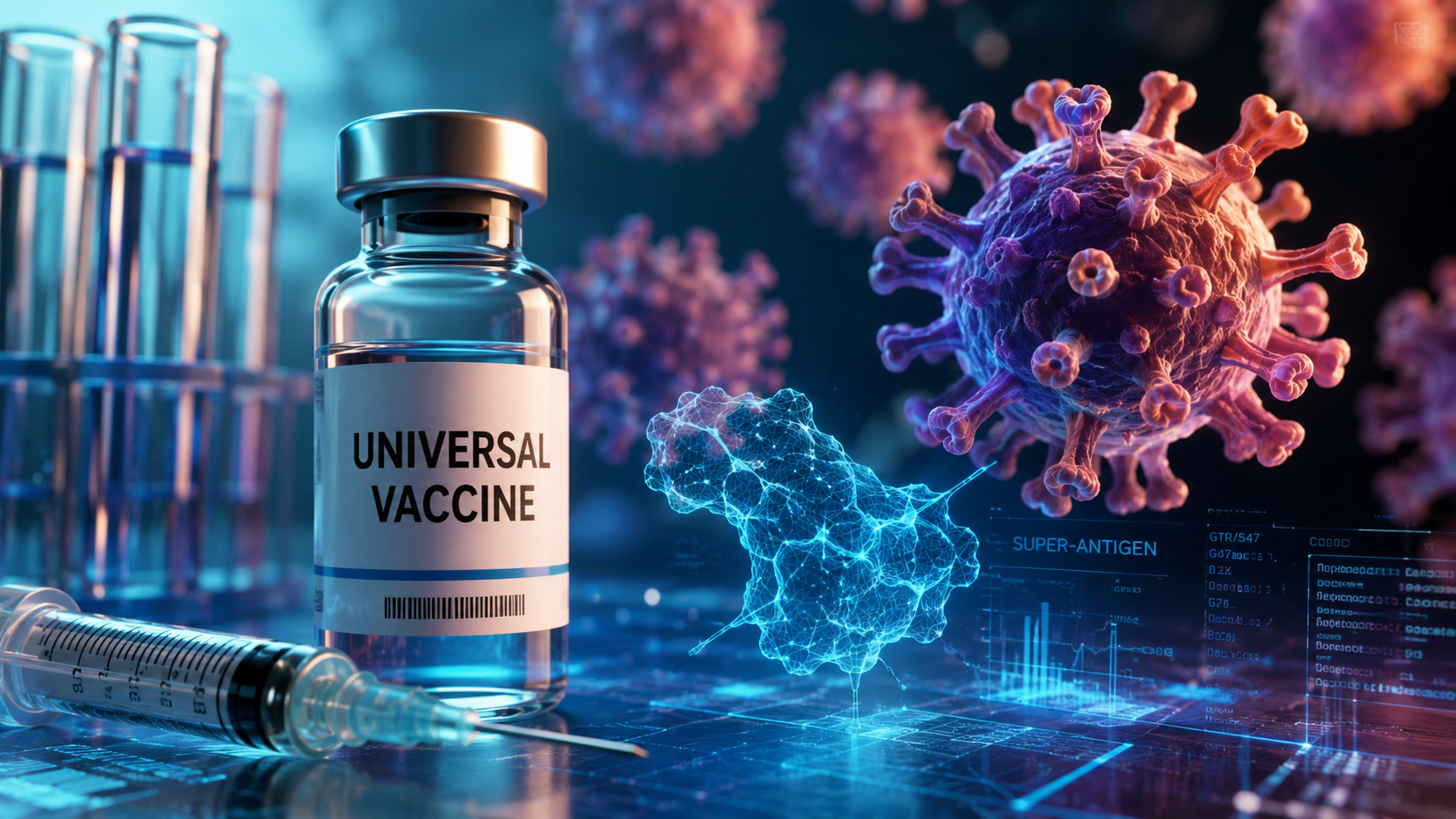
A single vaccine capable of providing broad-spectrum protection against multiple viruses and their variants may sound like science fiction. Yet this is precisely the goal of a new technology developed by researchers at the University of Cambridge, aimed at preventing future pandemics before they emerge. The study findings have been published in the Journal of Infection. «We’ve converted vaccine development from being reactive to being future proof – commented Professor Jonathan Heeney – Our vaccines will continue to provide protection against viruses even as they mutate into new strains».
Designing a universal super-antigen with AI
Unlike current vaccines, which target a specific viral strain or variant through a single antigen, the Cambridge team sought to develop a “universal” vaccine capable of protecting against all potential variants of coronaviruses. To achieve this, the researchers analysed genomic sequence data from the Sarbecovirus subgenus collected through global surveillance programmes. Using machine learning algorithms, they designed a super-antigen incorporating antigenic features shared across the entire group of viruses under investigation—including viruses that have not yet emerged. The technology has already been evaluated in a Phase I clinical trial involving approximately 40 healthy adult volunteers aged between 18 and 50 years. The study was conducted at the NIHR Southampton Clinical Research Facility and the NIHR Cambridge Clinical Research Facility.
Previous preclinical studies in animal models had already demonstrated that the vaccine is capable of eliciting a strong immune response against a broad range of coronaviruses. The next stage of development will be a larger Phase II clinical trial designed to assess its immunogenicity in a broader and more diverse population. According to the researchers, the super-antigen is compatible with most existing vaccine delivery platforms. For the first-in-human trial, it was administered as a DNA vaccine using a needle-free microfluidic jet delivery system, a technology that could facilitate the rapid vaccination of large populations.
From phase I trials to pandemic preparedness
The Cambridge researchers—who also founded the university spin-out company DIOSynVax—state that this is the first vaccine active component designed entirely through computer simulations to be tested in humans. In the future, the same approach could also be extended to other viral families, including Ebola viruses.
«Viruses like Influenza, Coronaviruses and the Ebola group are evolving continuously and by the time vaccines are rolled out, they may be poorly matched – the current ‘reactive’ vaccine system struggles to keep pace – said Professor Saul Faust from the University of Southampton, the trial’s chief investigator – This new class of universal vaccines are future-proofed. They not only protect against many variants simultaneously, but potentially against related viruses that haven’t yet emerged and spilt over to humans. If we can develop and clinically advance this new class of vaccines before a virus outbreak begins, millions of lives could be saved, lockdowns avoided and the economy preserved».


