A new collaboration agreement has been signed between the Swedish company NeuroVive Pharmaceutical AB and Karolinska Institutet, Stockholm in order to develop NeuroVive’s cyclophilin inhibitor compound NV556 for the treatment of mitochondrial myopathy, an area of high unmet medical need of new and effective treatment options.
NeuroVive Pharmaceutical AB and Karolinska Institutet will collaborate to develop the cyclophilin inhibitor NV556 for the treatment of mitochondrial myopathy
The collaboration will allow NeuroVive to reinforce its presence in the genetic mitochondrial disease key focus area where the company is also developing NVP015 compounds in mitochondrial respiratory chain diseases. The NV556 compound has a different and complementary mode of action than NVP015. The new compound is expected to have higher specificity and tolerabilitythan ciclosporin, which may facilitate better optimization of dosage. Ciclosporin is another cyclophilin inhibitor those mitochondrial protective effects mediated through inhibition of cyclophilin D have already been demonstrated by the research team led by Prof. Håkan Westerblad at Karolinska Institutet.
Mitochondrial myopathies are a group of neuromuscular diseases caused by damage to the mitochondria, the small energy factories found inside almost all the cells in the body. The symptoms of mitochondrial myopathies include muscle weakness, exercise intolerance and fatigue, and are often accompanied by other symptoms of genetic mitochondrial disorders such as heart failure or rhythm disturbances, dementia, movement disorders, stroke-like episodes, deafness, blindness, droopy eyelids, limited mobility of the eyes, vomiting, and seizures. The prognosis for these disorders ranges in severity from progressive weakness to death.
World’s oldest pharmaceutical and chemical company Merck announced the expansion of its end-to-end biodevelopment centers, including the opening of two new process development centers located in close proximity to customers in the Shanghai (China) and Boston (U.S.) metropolitan areas.
Merck will expand its global biodevelopment capacity with two new centres opening in China and U.S.
Each will provide a full range of process development capabilities and services and access to Merck’s technologies for product development, including cell line development services, both upstream and downstream process development, as well as non-GMP clinical production. The operation address the increasing customer demand for bioprocessing products, manufacturing capabilities and industry leading technological expertise and it follows the commercial success of Merck’s new biodevelopment center in Martillac, France, a fully operational single-use, GMP facility for manufacturing clinical stage batches.
“We are seeing an increasing global demand for end-to-end process development solutions and Merck offers a one-stop shop for biopharma customers,” said Udit Batra, member of the Merck executive board and CEO, Life Science. “This expansion reinforces our position as the premier supplier of all process development and clinical stage manufacturing solutions, materials and services needed for the production of biologics. This is a strategic, high-potential investment for Merck specifically designed to meet customer needs on three continents.”
Swedish biotech companies Symcel and Colzyx entered a new partnership agreement in order to test Colzyx’s 25 different new collagen VI derived antimicrobial peptides. The newly discovered molecules represents a first-in-kind new class of peptides characterised by the ability to kill bacteria in different ways. Under the terms of the agreement, each peptide will be tested independently or in combination with others.
Symcel and Colzyx signed a partnership agreement to test Colzyx’s new antimicrobial peptides using Symcel’s CalScreener technology
The analysis will be run with the aid of Symcel’s innovative cell-based assay tool for real-time cellular bioenergetic measurements calScreener™, that enables the calorimetric measurement of heat generated by metobolism and provides the rapid generation of unique information that can’t be acquired through other experimental methods. The continuous kinetic data for bacterial growth and inhibition so available represents a valuable tool for evaluating the novel antibacterial compounds.
“The innovative calScreener™ technology is set to further test and validate the effectiveness of our novel collagen VI peptides which, for the first time in research history, are being put to use to combat microbial infection by destroying bacteria”, said Eskil Söderlind, CEO at Colzyx. The company founded by Drs Matthias Mörgelin and Suado M Abdillahi (Medical Faculty, Lund University) is focused on the development of bio-implants with superior tissue integration function and products for wound healing with antibiotic effect.
According to the CEO of Symcel, Christer Wallin, CalScreener™ was selected to test the new peptides because of its ability to deliver unique data in real-time for the potentially new class of antimicrobials. “Our highly natural solution – utilising the bodies own built in defence mechanism and developing that into a form of a pharmaceutical drug for targeting microbial infection – has great healthcare potential”, added Eskil Söderlind.
The attention of the Italian Medicines Agency (Aifa) towards the attractiveness of the country as a base to conduct clinical trials has been acknowledged by its general manager, Mario Melazzini during the IX Meeting on Medical Devices. In his intervention, Mr Melazzini presented Aifa’s new “Fast Track” project to establish a rapid procedure for the evaluation of clinical trials. Mr Melazzini also signed the relative Memorandum of Undestandings with the other stakeholders involved in the process.
Aifa’s general manager, Mario Melazzini (credits: Giorgio Perottino)
“Fast track represents an important tool for interactions among different institutional stakeholders involved in the trials’ management”, said Mario Melazzini. The new procedure targets the need to reduce the complexity of the mechanisms leading to the authorisation of a new clinical trial under the Italian regulatory framework and represents Aifa’s concrete answer to the many requests to remove critical steps for the competitiveness and attractiveness of Italy for foreign investments.
According to Mr Melazzini, Aifa worked during the past few months to improve the functionality of the National Observatory for Clinical Trials, with implementation of new tools useful to monitor all the steps of the Fast Track procedure relative to the pharmaceutical products. The set up of the new framework has seen also the collaboration of Italian Regions in order to achieve a uniform view of the approach to be used. “The goal of the project is to assure an harmonic process able to guarantee efficiency, transparency and the time planning needed for evaluation and starting of the trials”, added Aifa’s general manager.
The exploitation of Evotec‘s unique induced pluripotent stem cell (“iPSC”) platform for the systematic drug screening in patient-derived disease models will enjoy the new possibilities coming from the new strategic drug discovery and development collaboration agreement signed between the German company and Celgene Corporation. The five years long project to discover a new class of disease-modifying therapeutics for neurodegenerative diseases will initially address Amyotrophic lateral sclerosis, Alzheimer’s disease, Parkinson’s disease, and multiple other neurodegenerative disorders.
According to the companies, Evotec will receive an upfront payment of $ 45 million, while Celgene holds exclusive options to in-license worldwide rights to Evotec programmes developed from the company’s compound library. Further payments up to $ 250 mln in milestones shall also be possible, as well as up to low double-digit royalties on in-licensed programmes. Additionally, Celgene may also take the opportunity to screen compounds from its proprietary CELMoD(R) library using Evotec’s iPSC platform to evaluate activity in models of neurodegenerative diseases.: “We are very excited about the opportunity to collaborate with Celgene, a medical innovation leader in the industry – said Dr Werner Lanthaler, chief executive officer of Evotec -. Celgene perfectly complements and accelerates our business model and vision in bringing first-in-class therapeutics to patients with neurodegenerative diseases, where the burden for society is increasing dramatically”
R&D activities will be run at Evotec’s state-of-the-art industrialised iPSC infrastructure, which has been optimised in terms of reproducibility and robustness to reach the highest industrial standards. A significant contribution to this optimisation came from the CureMotorNeuron project, run in collaboration with the laboratories of prof. Kevin Eggan, PhD, and Lee Rubin, PhD at the Harvard Stem Cell Institute. Additional aspects of the platform were built up through Evotec’s more than 10-year collaboration with the CHDI Foundation in the field of Huntington’s disease. Dr Cord Dohrmann, chief scientific officer of Evotec, added: “The fact that many promising drug candidates fail during clinical development highlights the limited predictive and translational value of pre-clinical disease models commonly used during the drug discovery process. This is particularly true for neurodegenerative diseases, a field that has proven intractable as novel therapeutics for Alzheimer’s disease, Parkinson’s disease, and motor neuron disease have largely failed. The use of patient-derived disease models for drug screening represents a paradigm shift as it places the testing of human disease relevance at the front end of the drug discovery process and is expected to lead to the discovery of more disease-relevant drug candidates but also more focused clinical development paths.”
The identification of the “holes” in the available pool of licensed medicines is a key point to better target R&D activities that might lead to the discovery of new treatments. Scientists at the Institute of Cancer Research, London, have published on Nature Reviews Drug Discovery a map of all 1,578 medicinal products licensed through the Food and Drug Administration and their mechanisms of action. According to the authors, the study represents the most comprehensive analysis of existing drugs across all diseases ever conducted.
The analysis of all 1,578 licensed drugs might help the identification of new molecular targets, says a paper published on Nature Reviews Drug Discovery
The analysis of molecular targets reveals that just approx. 3.5% of the 20,000 human proteins (667 separate proteins) are the targets of already developed medicinal products. Four are the key families of proteins accounting for 43% of all drug targets, representing the site of action of as many as 70% of all approved small-molecular drugs created so far. Researchers identified also 189 drug targets in organisms that are harmful to humans, such as bacteria, viruses and parasites. Two drugs for every target is the average value found in humans, but some proteins – such as the glucocorticoid receptor, which is the target of 61 anti-inflammatory medicines – represent the target of several different molecules. Cancer is the area of research with the higher introduction of ‘first-in-class’ innovation, with medicines characterised by new and unique mechanism of action.
There might be a huge amount of discovery space – in the form of human genes and their related proteins – free to find innovative solutions to many diseases, suggests the paper. The map, add the authors, could also be used to identify where a treatment for one disease could be effective against another.”We need to do more to innovate in drug discovery if we are really going to tackle the major medical challenges we face, such as cancer’s ability to evolve drug resistance in response to treatment – said professor Paul Workman, chief executive of The Institute of Cancer Research -. But to help direct future efforts in drug discovery, we first need a very accurate and comprehensive picture of the targets of the medicines that have been created so far, what is currently working, and most importantly where there is the greatest potential for the future. This new map of drugs, created through the latest computational analytical technologies, will enhance our ability to use rational, data-driven approaches to identify the most promising future targets and treatment combinations for the next generation of cancer and other diseases.”
The data used to run the analysis have been extracted from various big datasets including the canSAR database at The Institute of Cancer Research (ICR), the ChEMBL database from the European Bioinformatics Institute (EMBL-EBI) in Cambridge and the University of New Mexico’s DrugCentral database. The analysis was run using Big Data Analysis techniques.
The European Commission has published the new Annual Growth Survey 2017, which set up the beginning of the European Semester cycle for 2017. Priorities of action are devoted to economic recovery, investments in youth and jobseekers and in its start-ups and SMEs. The EU Commission also recommends the issuing of a Council recommendation on the economic policy for the euro area, a Communication on a positive fiscal stance for the euro area and a thorough analysis of economic labour market and social conditions.
The Annual Growth Survey published by the Eu Commission paves the way for the European Semester 2017 (credits: FotoshopTofs/pixabay)
Despite some positive signals of resilience and recovery of the European economy, the European scenery still remains fragile, with high rate of unemployment in many parts of Europe. GDP and productivity growth rates are far away their full potential and also investment levels are below pre-crisis levels, says the Survey. “There are still significant imbalances and broader risks within the euro area and the EU more generally, with convergence among and within the Member States stalled in many cases”. The document highlights the need to pursue structural reforms, still incomplete in many Member States, according to the country-specific recommendations.
The commitments set forward by the European Commission include the intention to build an economic policy based on the virtuous triangle of boosting investment, pursuing structural reforms, and ensuring responsible fiscal policies. Dialogue with the Member States will also be favoured, together with mainstreaming social considerations. The rules of the Stability and Growth Pact should assure the needed flexibility and facilitate reforms and investment through the “investment” and “structural reforms” clauses. The extension of the European Fund for Strategic Investments should further contribute to revamp the European economy. The Commission is also supporting new measures to deepen the Single Market in the field of services and products, as well as infrastructure. The final achievement of the Energy Union and a true Digital Single Market shall help the expansion of business opportunities as well as the closure of trade agreements and the establishment of a fair taxation system across the EU, states the Survey. Employment should benefit by the new Skills Agenda. The enforcement of the “deepening by doing” concept should help to strengthen the Economic and Monetary Union, as well as initiatives to complete the Banking Union and to take better account of euro area priorities.
EFPIA’s comments to the Survey
The European Federation of Pharmaceutical Industry Association (EFPIA) has agreed from its website with the three main objectives for EU economic policy – to boost investment, to pursue structural reforms and to ensure responsible fiscal policies. The pharmaceutical industry highlights also the need to set up a strategic approach to investment and structural reforms in order to achieve long-term fiscal sustainability. “Health policies should support social safety and active inclusion through preventive, curative and rehabilitation policies”, writes EFPIA in its commentary to the Survey. Investing in health and reforming health systems to deliver better health outcomes for each euro spent will be essential to reach these objectives. The Federation stresses the importance of the pharmaceutical sector as a main driver for the growth of the entire European economy, where innovation and highly-qualified employment are the rule and not the exception. “Investing in health is therefore both a prerequisite for achieving long-term fiscal sustainability, given the demographic changes in Europe, but will also in itself boost productivity, innovation and employment”, says EFPIA.
The pharmaceutical Federation also made some recommendations to help the European institutions to achieve the goals established by the Annual Growth Survey. First of all, the opportunity to evaluate Member States health policies based on a thorough and evidence-based assessment of health system performance, as pointed out by the “Joint Report on Healthcare and Long-term Care Systems and Fiscal Sustainability”. According to the report, overall indicators of population health such as healthy life years and mortality need to be complemented by disease-specific and patient reported health outcomes measures.
According to EFPIA, the focus on health outcomes should inspire the reform of healthcare systems, as variation in health outcomes is still high both across and within EU countries. “Many of these variations are due to unwarranted differences in clinical practice, care pathways or uptake in health technology”, says EFPIA’s comment. “Full transparency of outcomes data can also facilitate a positive “race to the top” and enable patient choice”. Integrated solutions for health service delivery and integrated budgets for healthcare and social care services should be the instrument of choice to reach the goal of treating patients affected by one or several chronic diseases.
Health system performance assessment (HPSA) should be used to compare and analyse healthcare performance. The instrument would facilitate the spreading of good practices and improving the performance of those lagging behind. The use of health data might also be important, for EFPIA, to improve health outcomes and reduce inefficiencies. Finally, EFPIA indicates the need to increase health spending in countries with poor health outcomes and access to health services.
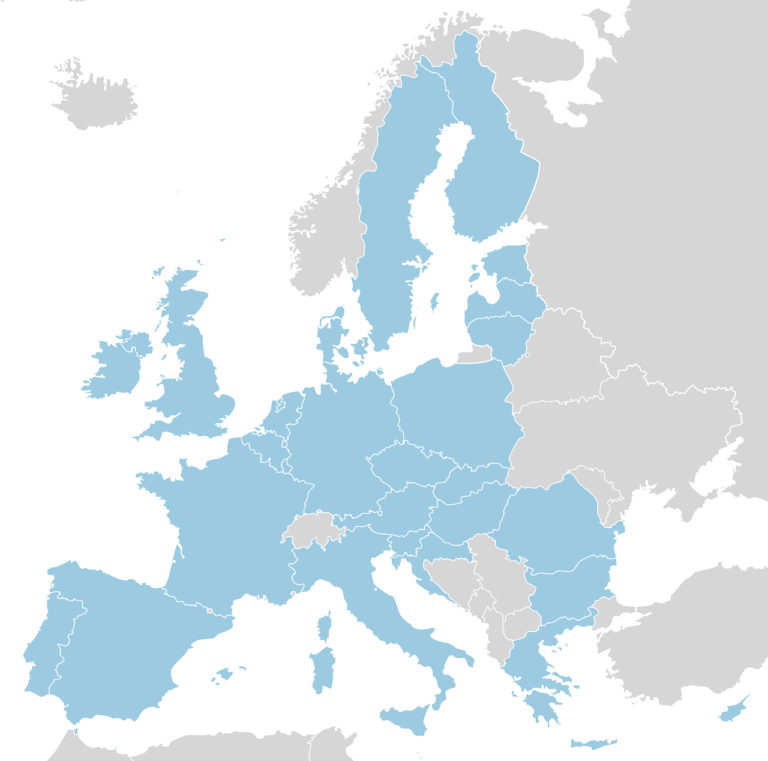
At least ten are the different countries which have yet advanced their candidature to host the new headquarters of the European Medicines Agency (Ema) in the post-Brexit era. Milan, the most important economic center of Italy, is among the favourite ones to win the race, as Lombardy is one of the main pharmaceutical districts not only in Italy, but in the all Europe. Here are located about 50% of the Italian pharmaceutical companies, an excellence sector at the top of international rankings as for quality of production and export. Milan also hosts top level universities, hospitals and research centers in the Life Science sector. The new Human Technopole will soon locate within the Expo area and will become the leading Italian milieu for research and innovation in Life Sciences. All of the above represents the basis for Milan’s candidature to relocate the European Medicines Agency once the official procedure for the Brexit will be started by the British Government. “Chances to bring Ema in Milan are high, we must play the game”, said the Italian Minister of Health, Mrs. Beatrice Lorenzin, during the meeting of November 17th organised by Guido Carli Association and Carlo Erba Foundation. All the different stakeholders taking part to the debate strongly reaffirmed their unanimous consensus to support the candidature. Minister Lorenzin announced also the Italian Government already allocated €56 million in order to build the new headquarters.
The Italian Minister of Health, Mrs. Beatrice Lorenzin, strongly supported Milan’s candidature for the post-Brexit relocation of the European Medicines Agency’
Mr. Massimo Scaccabarozzi, president of the Italian industrial association of pharmaceutical industry Farmindustria, said the sector might strongly benefit from Ema being relocated in Milan. “Milan has all the needed characteristics to become an European hub for pharma. The minister knows well the meaning of this opportunity for Milan and for Italy”, he said. Politics and industry agreed on the fact the choice may represent a boost for the entire Italian economy, not only for the pharmaceutical sector. “The Government took the right decision to work towards Ema, and not towards the European Bank Authority: a choice that leads to economic value” said Mrs. Lorenzin. Diana Bracco, president and managing director of Bracco Pharmaceuticals, is the coordinator of the working group set up by the Lombardy’s Governor, Mr. Roberto Maroni, in order to prepare the dossier for the Milan’s candidature. Minister Lorenzin announced also the institution of a special Task Force to coordinate and represent Milan and Italy in all needed circumstances.
The Italian city of Parma is already hosting the European Food Safety Authority (Efsa). The strong synergy of interests among the two European agencies might further strengthen the candidature of Milan in order to built a sort of “European FDA”, agreed the participants to the debate. Efsa’s Senior policy advisor, Mr. Alberto Spagnolli, recalled the main challenges the Authority had to face during its relocation to Parma, starting from the proper choice of modern and well equipped headquarters to the need of easy connections with all Europe and the need to host also an European School. But many would be also the opportunities to host both the two European agencies in Italy, he said. Ema and Efsa share competences over different topics, the most important of which is antibiotic resistance, a priority in all European agendas. The presence of “chemical mixtures” of residues of veterinary medicines in human food and animal safety and wellness are other common interests. A reduction of the operative costs of both institutions might also benefit from their common location in Italy, according to European policies that indicates the opportunity to rationalize the framework of Eu’s decentralised agencies.