Home Authors Posts by Cristiana Bernini

Cristiana Bernini

307 POSTS 0 COMMENTS

Deal for rare diseases

Alexion Pharmaceuticals has announced the intention to acquire Synageva Biopharma. The deal is valued approx. $8,4 billion and should close by mid 2015.

Alexion will strengthen its global leadership in developing and commercializing transformative therapies for patients with devastating and rare diseases. The company expects to achieve annual cost synergies starting this year and growing to at least $150 million in 2017.

Synageva’s pipeline consists of protein therapeutic programs for rare diseases with unmet medical need. The company is planning for a global launch of sebelipase alfa for the treatment of LAL Deficiency and is dosing patients in a Phase 1/2 trial with its second program, SBC-103 for MPS IIIB. Eculizumab is Alexion’s treatment on the market for patients with PNH and aHUS, two debilitating, ultra-rare and life-threatening disorders caused by chronic uncontrolled complement activation.

A partnership for compassionate use

Johnson & Johnson announced a first-of-its-kind partnership with the Division of Medical Ethics at the NYU School of Medicine that enlists a third party to review requests made to the Janssen Pharmaceutical Companies for compassionate use of its investigational medicines. A pilot program will focus on a single Janssen investigational medicine and, if successful, will become a model that will be applicable more broadly across Johnson & Johnson.

The company will obtain independent advice, further ensuring that the evaluation of requests for investigational medicines prior to their approval by the U.S. FDA or other global health authorities are treated in the most fair and ethical manner.

The NYU School of Medicine will establish the Compassionate-Use Advisory Committee (CompAC), an external group of 10 internationally recognized medical experts, bioethicists and patient representatives to pilot the new approach.

Licence agreement

Isis Pharmaceuticals has entered into an exclusive license agreement with Bayer HealthCare to develop and commercialize its first-inclass ISIS-FXIRx inhibitor for the prevention of thrombosis. The antisense drug is in development for the prevention of clotting disorders.

Under the terms of the agreement, Isis shall receive up to $155 million in near-term payments, including an immediate $100 million up-front payment and a $55 million payment following a Phase 2 study in patients with compromised kidney function. Isis is also eligible to receive milestone payments as the drug advances toward the market. In addition, Isis shall receive tiered royalties in the low to high twenty percent range on gross margins of ISIS-FXIRx. Bayer will assume all global clinical development as well as worldwide regulatory and commercialization responsibilities for ISIS-FXIRx.

A monoclonal antibody to treat psoriasis

The European Commission granted a marketing authorisation valid throughout the European Union for Cosentyx on 15 January 2015. Cosentyx is a medicine used to treat moderate to severe plaque psoriasis (a disease causing red, scaly patches on the skin) in adults who require systemic (affecting the whole body) treatment. It contains the active substance secukinumab. The active substance in Cosentyx, secukinumab, is a monoclonal antibody. A monoclonal antibody is an antibodY that has been designed to recognize and attach to a specific structure (called an antigen) in the body. Secukinumab has been designed to attach to a cytokine (messenger molecule) in the immune system called interleukin 17A. This cytokine is involved in the inflammation and other immune system processes that cause psoriasis. By attaching to and blocking the action of interleukin 17A, secukinumab reduces the activity of the immune system and the symptoms of the disease. Cosentyx has been compared with placebo (a dummy treatment) in 4 main studies involving 2,403 patients with psoriasis, some of whom had had previous systemic treatments for the condition. The main measure of effectiveness of Cosentyx was improvement in the severity and extent of psoriasis after 12 weeks using two separate scoring systems (a 75% or more reduction in Psoriasis Area Severity Index [PASI] score, and a decrease of Investigator’s Global Assessment [IGA] score to 0 or 1 which indicates clear or nearly clear skin); in addition, in one study Cosentyx was compared with another authorised treatment for psoriasis, etanercept. The studies showed that Cosentyx is effective at improving the symptoms of psoriasis: taking the results of the 4 studies together, the percentage of patients achieving a 75% reduction in their PASI scores was 79% with Cosentyx, 44% with etanercept and 4% with placebo; with regard to IGA scores, 65% of patients given Cosentyx achieved a score of 0 or 1, compared with 27% of patients given etanercept and 2% of those given placebo. Benefits continued to be shown when treatment with Cosentyx was continued for up to 52 weeks. The most common side effects with Cosentyx (which may affect more than 1 in 10 people) are upper respiratory tract infections (colds) with inflammation of the nose and throat (nasopharyngitis) and blocked or runny nose (rhinitis). Because Cosentyx may increase the risk of infection, it must not be given to patients with serious active infections such as tuberculosis.

The first stem cell treatment approved in EU is made in Italy

The European Commission granted a marketing authorisation valid throughout the European Union for Holoclar on 17 February 2015. Holoclar is a stem-cell treatment used in the eye to replace damaged cells on surface (epithelium) of the cornea, the transparent layer in front of the eye covering the iris. It is used in adult patients with moderate to severe limbal stem-cell deficiency caused by burns, including chemical burns, to the eyes. Patients with this condition do not have enough limbal stem cells which normally act as a regeneration system, replenishing the outer corneal cells when they get damaged and when they age.

APERTURA

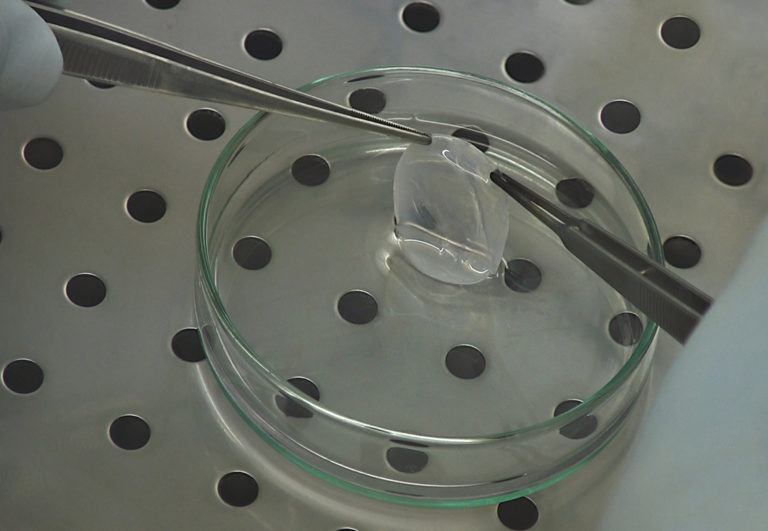
Holoclar is a type of advanced therapy product called a ‘tissue engineered product’. It consists of cells taken from the patient’s limbus (at the edge of the cornea) and then grown in a laboratory so that they can be used to repair the damaged corneal surface. Because the number of patients with limbal stem-cell deficiency due to burns to the eyes is low, the disease is considered ‘rare’, and Holoclar was designated an ‘orphan medicine’. Holoclar must only be used by an appropriately trained and qualified eye surgeon in a hospital, and must only be given to the patient whose limbal cells were used to manufacture the medicine. In the first stage of treatment, a small part of healthy limbal tissue (1-2 mm2 in size) is taken from the patient in hospital and sent to the manufacturer on the same day. Next, the cells in the tissue are grown in a laboratory and frozen until the date of surgery is confirmed. Thawed cells are used to make Holoclar by growing them on a membrane made of a protein called fibrin. Holoclar, comprising the cells and the membrane, is then sent back to the hospital, where it is immediately surgically implanted in the patient’s eye. Antibiotics to prevent eye infection should be given to patients after limbal tissue has been taken from them. Following the surgery, the patient should receive antibiotics and an appropriate anti-inflammatory medicine. The active substance in Holoclar is the patient’s own limbal cells, which include cells from the surface of the cornea and limbal stem cells grown in a laboratory. Before Holoclar is used, the damaged corneal surface tissue of the affected eye is removed. Once implanted in the eye, the corneal cells of Holoclar help to replace the corneal surface, while the limbal stem cells serve as a reservoir of new cells that continuously replenish the cornea. Holoclar was shown to be effective in restoring a stable corneal surface in patients with moderate or severe limbal stem-cell deficiency caused by burns in a retrospective study using patients’ past medical records. One year after Holoclar implantation, 75 out of 104 patients studied (72%) were judged to have had successful implants based on the presence of stable corneal surface with no surface defects and little or no ingrown blood vessels (a common feature of limbal stem-cell deficiency). There were also reductions in patients’ symptoms, such as pain and inflammation, and improvements in vision. The most common side effect with Holoclar (seen in more than 1 patient in 10) is blepharitis (inflammation of the eye lid). Since Holoclar has been granted a conditional approval, the company that markets Holoclar will provide further data on Holoclar. The company is to provide data on the benefits and risks of Holoclar from a prospective clinical study.

First results on favipiravir against Ebola

The first news leaked on favipiravir for Ebola seem to indicate that the drug appears to have had a positive effect on some patients. The same researchers who are conducting the study in Guinea, however, are very skeptical and expressed the need for more information about the effectiveness of the treatment; the interpretation of the data is complex because the study lacks a control group with which to compare the results obtained. All patients, in fact, given the high mortality rate of the virus, received treatment. Favipiravir is a flu drug that blocks viral replication by interfering with the replication of the genome. Approved in Japan last year, is currently been tested on 69 patients over the age of fourteen, but studies are obviously still ongoing. Preliminary data suggest that manages to halve mortality in patients with Ebola as 50%, but only if the viral load is low.

New antitumoral study based on cell therapy

This was announced on February the 26 by Apeiron Biologics AG. The project is based on the collection, stimulation and subsequent re-inoculation of immune cells in patients with melanoma, pancreatic cancer and other solid tumors that have spread to other parts of the body or can not be removed with surgery. It takes place in America at Wake Forest Baptist Medical Center (WFBMC) led by Pierre L. Triozzi, professor of internal medicine at the Comprehensive Cancer Center of WFBMC in North Carolina. Primary endpoint of the study to evaluate the safety, tolerability and optimal dose of autologous immune cells that are gene silenced ex vivo for Cbl-b, a completely new approach to support the immune system’s ability to fight cancer. The immune cells may be more successful in attacking the cancer after Cbl.b silencing siRNA Cbl-b. According to Triozzi: “This activation of the immune system could, in principle be applied for the treatment of any type of cancer, and also in combination with other immunotherapies such as other blocks checkpoint key or vaccination approaches against the tumor”.

Phase 2 study for ralinepag in pulmonary hypertension

Arena Pharmaceuticals, Inc. announced the initiation of a Phase 2 clinical study of ralinepag, a receptor agonist for non-prostanoid prostacyclin (IP) intended for the treatment of pulmonary arterial hypertension (PAH). The case-control study, randomized double-blind trial will last 22 weeks and will evaluate the hemodynamic effects, safety and tolerability of ralinepag on up to 60 patients with PAH. PAH is a progressive disease that can lead to heart failure and reduce life expectancy. Based on US data, it is estimated that the five-year survival from diagnosis of the disease is 57%. Ralinepag, orally available, in the phase 1 studies showed half-life of about 25 hours and was therefore suitable for one or two doses per day. The FDA has granted orphan drug status for the treatment of PAH.

Multicentric study in Duchenne muscular dystrophy

Pfizer began enrolling patients in a multicenter Phase II of PF-06252616, an experimental anti-myostatin monoclonal antibody, for the treatment of Duchenne muscular dystrophy (DMD). The study was designed to evaluate the safety, tolerability and efficacy of PF-06252616 in boys aged between six and ten years, with a diagnosis of DMD regardless of genotype. DMD is a genetic disease characterized by progressive muscle degeneration and weakness. Myostatin is a protein that helps muscle growth and it is believed that by blocking its activity could have potential therapeutic application in the treatment of diseases such as DMD. Based on the proposed mechanism of action of PF-06252616, the company is considering whether there is the ability to increase muscle mass and function in boys with DMD who are weak and have lost muscle. The Food and Drug Administration (FDA) has granted orphan drug designation for PF-06252616 in July 2012 and fast track designation in November 2012.

Phase Ib study on prevention of C. difficilis infections

Synthetic Biologics , a biotech company, is working on a phase Ib clinical trial of SYN-004, a beta-lactamase proposal for the prevention of infection by Clostridium difficilis (C. difficilis). The randomized, double-blind, placebo-controlled phase Ib is underway in Miami and has been designed to further assess the safety, tolerability and pharmacokinetics of multiple oral doses and increasing of SYN-004 in healthy volunteers. A total of 24 healthy adult volunteers will be enrolled into three groups, with six participants who will receive SYN-004 and two participants treated with placebo for each group. In the clinical trial Phase Ib, six volunteers per group receive increasing doses of SYN-004 per cohort, four times a day for a period of seven days. SYN-004 is designed to be the first and only treatment to prevent infection with C. difficilis.

Newsstand

  • Supplement to n.5 - October 2025 NCF International n.2 - 2025
  • NCF International n.1 - 2025
  • Supplemento to n.9 - October 2024 NCF International n.3 - 2024