
Merck Millipore introduced enhancements to its industry-leading Emprove® portfolio of pharmaceutical raw materials. The newest enhancements enable the selection of raw and starting materials based on their risk assessment: Essential products for moderate risk level applications; Expert products for higher risk applications where low microbiological and endotoxin levels are critical; API products, GMP compliant and provided of the quality and regulatory documentation required for approval.
Cristiana Bernini

Primary clinical endpoint reached
The LixiLan-L Phase III clinical trial sponsored by Sanofi met its primary endpoint in patients with type 2 diabetes treated with insulin glargine with or without metformin. The fixed-ratio combination of insulin glargine 100 Units/mL and lixisenatide, a GLP-1 receptor agonist, demonstrated statistically superior reduction in HbA1c (average blood glucose over the previous three months) compared with insulin glargine 100 Units/mL. Overall, the fixed-ratio combination had a safety profile reflecting those of insulin glargine 100 Units/mL and lixisenatide.
Regulatory submissions are planned for Q4 2015 in the United States and Q1 2016 in the European Union.
New brand identity
The global pharmaceutical CDMO Aesica Pharmaceuticals has launched its new brand identity in order to reflect the new alignment and consolidation of the full Consort Medical group following acquisition. The new logo and branding will be adopted across all Consort Medical businesses, creating a consistent identity for all group companies. The combination of Aesica and Bespak will provide customers with a single source for drug and device development, formulation, manufacturing and packaging. Aesica provides API and finished dose formulation development and manufacturing services. Bespak is a global market leader in the development and manufacture of drug delivery devices
How to manage intellectual property and patent law

International intellectual property regulations are doing serious damage to the pharmaceutical industry and, by extension, to the health of people around the world. The core of the problem: growing global concern about how to ensure affordable access to medicine without damaging the initiatives that sustain pharmaceutical research. Attempts to address the issues have resulted in significant disagreement between developed and emerging economies about just how much protection should be available to companies that develop new drugs.

Members of the World Intellectual Property Organization, which celebrated its 40th anniversary this year, are trying to resolve their differences on how – and even whether – emerging market countries should move to a framework that offers greater IP protection, but the results to date are not promising. “Access to medicine” advocates propose measures based on national income levels; branded drug producers want a time-based transition schedule; others argue that patent protection should be linked with the UN’s Human Development Index, which is a relative scale with frequently-changing outcomes and policy incomes.
The case for strong patent protection
Developed countries, particularly the United States, usually try to commit emerging economies to more stringent intellectual property right rules in exchange for bilateral concessions in other areas of trade. These arrangements typically involve an extension of patent terms and data exclusivity as well as limits to parallel trade and accelerated marketing approval for generic producers.
Strengthening intellectual property rights, they argue, incentivizes research on diseases that are specific to developing countries and promotes technology transfer through the localization of R&D and production investments. This then contributes to improving typically inadequate health service infrastructures.
The counterargument: cost and accessibility
For many observers in emerging economies, however, strict protections on IP translate into higher prices for life-saving drugs, delayed generic competition, and weakened local production. As a result, countries like India have taken the lead in employing patentability criteria that may set new standards for emerging and possibly emerging markets alike.
In 2005 India amended its patent law in line with the international agreement on trade-related aspects of intellectual property rights (TRIPS). However, it also inserted a provision preventing the patentability of substances including salts, esters, and metabolites, and other derivatives and combinations of previously known compound. It also banned the patenting of new uses of existing compounds.
This provision has since been used to deny drugs such as Sutent, Pegasys, Tarceva and Glivec the same patent protection available to them elsewhere.
Attempts to challenge the law as not being TRIPS-compliant failed, with India’s supreme court ruling that the provision was, among other things, intended to ensure that the country’s citizens had easy access to life-saving drugs and to prevent “evergreening” of patents.
However, research published last year casts doubt on just how effective this approach is, at least regarding the first part: a review of 184 drugs between 2000 and 2009 concluded that only 60 percent of the products in US markets were available to Indian patients by 2010. Half of the drugs had a launch lag of more than five years, while a quarter lagged by more than nine.
The “evergreening” debate
“Evergreening” is a series of techniques used by pharmaceutical firms to continue protecting their drugs after the initial patent expires in order to maximize their return on R&D investments. That is, they prevent or limit the manufacture of generic drugs for longer.
The specific approaches used are numerous, but include continued differentiation of branding, dosing, formulation or mode of action; patenting active compounds or co-specialized delivery systems; and seeking to expand a compound’s market through approvals for new indications.
Critics of evergreening strategies argue that this means that patients miss out on the benefits of cheaper generic drugs. However, they also usually neglect the existence of regulatory and market responses that limit the risk of abusive patenting.
For instance, patentability typically requires an invention to be novel, non-obvious and useful in the sense of capable of industrial application. The coloring and scoring of a drug may appear on the surface to be purely aesthetic, but if it can be shown to improve patient compliance, and therefore efficacy, that is novel and not obvious, and must therefore be patentable. In short, properly designed and implemented patent systems already deal with some of the often claimed evergreening concerns.
Reverse payments
Both the US and EU systems allow companies to legally challenge patents and potentially speed up generic substitution. In Europe, generic companies have nine months to revoke a patent through a process administered by the European Patent Office. In the US, the Hatch-Waxman Act offers producers of bioequivalent generics that certify not to be infringing any valid patent surrounding the original compound an abbreviated new drug application.
When this happens the patent holder has a choice: contest the application, with all the costs and uncertainty this involves; ignore it, and plan on losing up to 80 percent of its total sales within a year; or pay the generic manufacturer not to get involved for a defined period.
This last approach, known as a reverse payment or “pay for delay,” can mean that a big pharmaceutical company that has already spent hundreds of millions of dollars developing a drugs can find itself paying out millions more to another company to hold on to its own IP in what could be characterised as a form commercial blackmail. Or, looked at the other way, big companies are using their financial heft to prevent competition that could lead to cheaper drugs for patients. However, if a settlement allows entry before any litigation would be terminated and patent expires – whichever comes first – the apparently anticompetitive agreement may actually improve consumer welfare.
For more than 15 years, pay-for-delay deals have extended the life of contested pharmaceutical patents, and given the indeterminate impact on consumer welfare, the US Supreme Court has been unwilling to take a definitive position either way. Just as in other areas of dispute between intellectual property rights and antitrust law, settlement deals present a substantial conceptual challenge to be translated into efficient regulatory standards. Such difficulty, however, does not justify a call for additional actions against ever-greening of pharma patents or the use of any regulatory short-cuts.
Conclusion
Escalating healthcare expenditures and the need to ensure access to affordable medicine in both emerging and emerged economies are fuelling calls for containing evergreening practices around the world. But such practices are the necessary outcome of a system that responds to market incentives and is already sufficiently controlled by established patentability standards and policies to determine patent term extension. Even reverse payment arrangements may ultimately deliver consumer net benefits. They present a challenge for efficient rule writing and a reminder of the need for better and coordinated policy analysis.
Guanfacine to treat attention deficit hyperactivity disorder
The European Commission granted a marketing authorisation valid throughout the European Union for Intuniv on 17 September 2015. The active substance in Intuniv is guanfacine. Intuniv is used to treat attention deficit hyperactivity disorder (ADHD) in children and adolescents aged 6 to 17 years when stimulant medicines are not appropriate or do not control their symptoms well enough. The way Intuniv works in ADHD is not established. It is thought that the active substance, guanfacine, might influence the way signals are transmitted between cells in areas of the brain called the prefrontal cortex and basal ganglia by attaching to certain receptors that are heavily concentrated in these areas. Several studies have shown Intuniv improving ADHD symptom scores (ADHD-RS-IV) in children and adolescents. In a study of 337 children aged 6 to 17 years, the reduction in ADHD symptoms with Intuniv treatment after 10 to 13 weeks was 24 points compared with a reduction of 15 points seen with placebo (a dummy treatment) and 19 points seen with atomoxetine (an ADHD medicine). In another study of 312 adolescents aged 13 to 17, the reduction in ADHD scores at 13 weeks was 25 points with Intuniv and 19 points with placebo. Two other short-term studies involving 631 patients also showed Intuniv at various doses improving ADHD scores more than placebo. Intuniv was also evaluated in terms of treatment failures (based either on worsening of ADHD symptoms or patients stopping treatment). In a long-term maintenance study in 301 children and adolescents aged 6 to 17 years treatment failures occurred in 49% of patients taking Intuniv compared with 65% of those taking placebo. The most common side effects with Intuniv are sleepiness (in nearly half of all patients), headache (in more than a quarter), tiredness (in about 1 patient in 5), and upper abdominal pain and sedation (both in around 1 in 10). Sleepiness usually begins at the start of treatment and lasts for 2 to 3 weeks. More serious side effects are less common and include: low blood pressure and weight gain (both in around 1 patient in 30), slow heart rate (1 in 60) and fainting (in less than 1 in 100).
Alirocumab to treat adults with primary hypercholesterolaemia
The European Commission granted a marketing authorisation valid throughout the European Union for Praluent on 23 September 2015. Praluent is a medicine used to treat adults with primary hypercholesterolaemia and mixed dyslipidaemia. Praluent is to be used together with a low-fat diet, in the following ways:
- in combination with a statin (other cholesterol-lowering medicines), or a statin plus other fat-lowering medicines, in patients who do not adequately respond to the maximum tolerated dose of the statin;
- alone or in combination with other fat-lowering medicines in patients who cannot tolerate or cannot be given statins.
The active substance in Praluent, alirocumab, is a monoclonal antibody. Alirocumab has been designed to attach to a protein called ‘PCSK9’. This protein attaches to cholesterol receptors on the surface of liver cells and causes these receptors to be absorbed and broken down inside the cells. These receptors control blood levels of cholesterol, especially LDL-cholesterol, by removing it from the bloodstream. By attaching and blocking PCSK9, Praluent prevents the receptors from being broken down inside cells and therefore increases the number of these receptors on the cell surface, where they can attach to LDL-cholesterol and remove it from the bloodstream. This helps to reduce the amount of cholesterol in the blood. Praluent has been studied in 10 main studies involving over 5,000 adult patients with hypercholesterolaemia (including patients with heterozygous familial disease) and mixed dyslipidaemia. Some studies looked at Praluent taken on its own, while others studied Praluent in combination with other fat-lowering medicines, including patients on the maximum recommended doses of statins. Some studies compared Praluent with placebo (a dummy treatment) and others to another medicine for hypercholesterolaemia (ezetimibe). These studies showed that when Praluent was given on top of a statin it led to a substantial reduction in blood levels of LDL-cholesterol (between 39 and 62% more than placebo) after 6 months of treatment. When given on top of standard treatment or on top of placebo, Praluent produced a 24 to 36% greater reduction in blood levels of LDL-cholesterol than ezetimibe. The most common side effects with Praluent (which may affect up to 1 in 10 people) are injection site reactions such as pain and redness, problems affecting the nose and throat such as colds, and itching. For the full list of side effects and restrictions, see the package leaflet.
Association tiotropium / olodaterol improves the quality of life in COPD
Boehringer Ingelheim announced the publication of new data from the Phase IIIb OTEMTO® 1&2 trials (NCT01964352/NCT02006732), which show Spiolto® Respimat® (tiotropium/olodaterol) provides consistent, clinically meaningful improvements in quality of life versus placebo in patients with COPD.
In COPD, the quality of life is measured by the SGRQ. A reduction equal to or greater than 4 points of the SGRQ score is considered clinically significant. I OTEMTO® trial results show that tiotropium / Olodaterol implies reduction of the SGRQ total score of 4.67 compared to placebo. Additional data collected in clinical trials OTEMTO, involving 1,600 patients, demonstrated that tiotropium / Olodaterol Respimat® determines:
- clinically meaningful improvements in breathlessness compared with placebo (improvement of 1.62 points in total score TDI), which translate into significant benefits in terms of quality of life;
- Dramatic improvements in lung function, breathlessness and quality of life compared to tiotropium;
- safety profile similar to monotherapy with tiotropium or placebo.
The incidence of adverse events (AE) was broadly comparable in different groups of patients, with a higher incidence of adverse events leading to discontinuation of treatment in the groups that were administered placebo than with tiotropium / Olodaterol.
Tiotropium / Olodaterol Respimat® has been approved in more than 20 countries in Europe, the United States, Canada and Australia for the treatment of patients with COPD. Tiotropium / Olodaterol Respimat was developed from tiotropium, boosted by Olodaterol, unique and effective beta2-agonist long-acting, acting quickly specifically developed as a drug can be associated with tiotropium. Tiotropium + Olodaterol is administered through the device Respimat, inhaler device, free of propellant gas, which delivers the active ingredient with a fine mist, which allows the drug to settle deep in the lungs, breathing naturally. Clinical studies OTEMTO® 1 & 2 are part of the Phase III program that TOviTO®, involving more than 15,000 patients, is one of the largest study programs ever conducted in COPD.
Hemophilia A: confirmed efficacy and long term safety of rFVIIIFc
Sobi Swedish Orphan Biovitrum and its partner Biogen have announced the publication of the interim results of a clinical study that showed low rates of bleeding in individuals with hemophilia treated with rFVIIIFc (fusion protein, consisting of the recombinant factor VIII linked to the Fc domain of human IgG1) in prophylaxis regimen at extended intervals of administration. Patients who completed the Phase III studies A-LONG and Kids A-LONG were enrolled the Phase III ASPIRE. The results obtained to date indicate that the majority of study participants ASPIRE maintained or extended intervals of drug administration than studies A-LONG and Kids A-LONG. At the time of the interim analysis, the median of treatment in the study ASPIRE was 80.9 weeks in the adult and adolescent participants who completed the A-LONG study, and 23.9 weeks in those in children who completed the study Kids A-LONG. The primary endpoint of ASPIRE is the development of inhibitory antibodies, whose onset is not however been reported in any of the groups. For the period of analysis considered interim ASPIRE, the number of bleeding on an annual basis (annualized bleeding rates or ABR) in adults and adolescents in arms prophylaxis regimen customized, changed weekly and were 0.66, 2 .03 and 1.97. Even children in prophylaxis regimen custom were recorded lower rates of bleeding, with an overall median of 0.0 ABR in children under 6 and 1.54 in children aged between 6 and 12 years. These findings are consistent with those obtained in the Phase III studies A-LONG and Kids A-LONG. In addition to the results of efficacy and safety, the publication also contains data on the frequency of infusions in prophylaxis regimen throughout the period considered from the end of the study A-LONG. Of adults and adolescents treated in prophylaxis and who continued the study (n = 128), 72% maintained the same dosing interval, 22% of those stretched between administration and the next, while 6% has reduced intervals. Participants in the extension study could change the treatment group at any time.
Clinical study on ICT-107 soon in Europe
Pharmacell B.V. a leading Contract Manufacturing Organization for Cellular Therapies and Regenerative Medicine in Europe, announced in March that it finalized an agreement with ImmunoCellular Therapeutics Ltd. to support its pivotal phase 3 clinical trial in Europe with ICT-107. ICT 107 is a dendritic cell-based vaccine developed for glioblastoma multiforme, one of the commonest and deadliest forms of brain cancer. Under the terms of the agreement, PharmaCell will perform a Technology Transfer from its US-based contract manufacturing partner to its newly acquired Geleen facility (The Netherlands), and support the subsequent clinical trial with ICT-107.
Freeze Drying Equipment
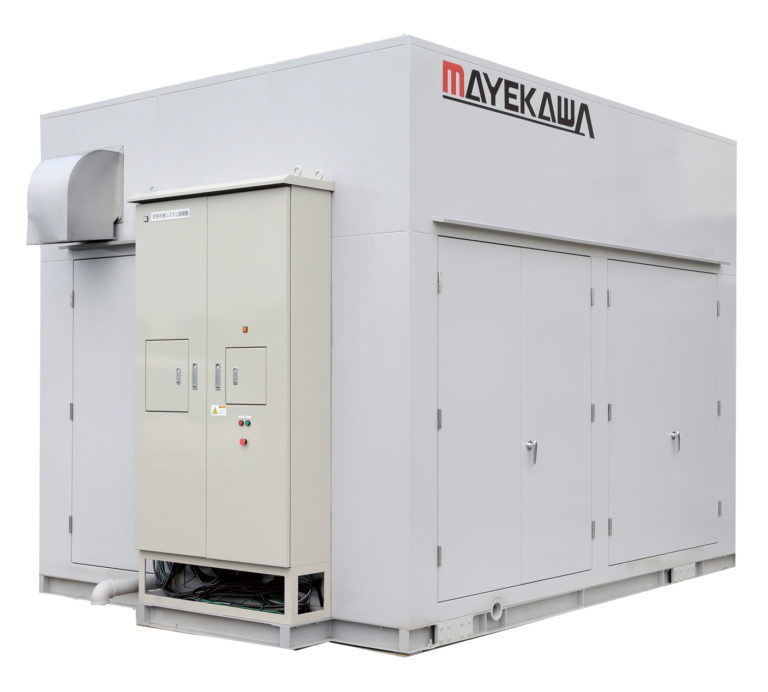
IMA and Mayekawa announced that IMA Life, headquartered in Bologna, Italy, has standardized on the company’s refrigeration technology for integration into aseptic processing and freeze drying equipment for the pharmaceutical industry.

IMA Life, a division of IMA S.p.A., offers machines to meet the demanding requirements of the pharmaceutical industry worldwide. The company offers machines for washing and de-pyrogenation of pharmaceutical vials, filling and stoppering in aseptic environments of vials, ampoules and syringes, including isolation technology and containment solutions. Other applications include filling and closing of pharmaceuticals and cosmetics, micro-dosing of aseptic powders, as well as industrial, pilot and laboratory freeze-dryers, which can be combined with the industry’s widest range of automated loading and unloading system solutions.
The European regulation n°517/2014 of May 2015 implies a drastic reduction of fluorinated gases with high impact on global warming. Moreover, in 2020, the use of commonly used refrigerant in freeze dryers may be prohibited for maintenance or service of refrigeration equipment. A new solution which uses an air based refrigeration system is presented here below. The refrigeration gas being replaced by air is referred to as the ultimate natural refrigerant.
The R404A is commonly used in freeze-drying facilities and its GWP is 3922. Although the new law provides an exemption for applications which cool products at temperatures below -50°C, it is time to question the solutions for the future.
New refrigerants have appeared on the market with a GWP below 2500. They generally involve restrictive conditions of use and may not conform to future regulatory changes.
IMA Life now propose to equip its freeze dryers with a new refrigeration technology using the ultimate natural refrigerant “air”. The system is based on a series of compression/cooling/expansion steps of AIR, which can be cooled to a temperature as low as -100 ° C.
Main benefits are:
- No global warming potential refrigerants or ozone depleting refrigerants
- No environmental regulations
- Low temperatures (-100°C)
- Simplicity and robustness
- Greater efficiency at low temperature than conventional refrigeration
- More economical than LN2 when running cost is taken into account
Air is a familiar gas, without any effect on the ozone layer or causing global warming. It is neither toxic nor flammable. Its critical temperature of -140.7°C is low, and when air is used at a higher temperature range, it becomes a gas cycle without phase transition.
For the manufacture of its freeze dryers, in the 1990s IMA Life established a partnership with Mayekawa, a company recognized as a leading provider of refrigeration solutions. Since then IMA Life equipped the majority of its freeze dryers with dual-stage screw compressors from Mayekawa.
Today, IMA Life and Mayekawa propose this new refrigeration technology referred as PascalAir.
About MAYEKAWA
Mayekawa Mfg. Co., Ltd. was founded in 1924 by Mr. Kisaku Maekawa. The company started business as an industrial refrigeration compressor manufacturer, has been producing various products, services and engineering in the past based on the accumulated cooling and compression technologies to respond to the customer’s needs.
MAYEKAWA provides various products and systems required by today’s markets not only Refrigeration compressor, Cold storage and Ice making unit at skating rink with cooling technology but also Meat processing robot, Air Conditioning system in hospital, museum and air craft and BOG recovery unit in Oil refinery.
About IMA Life, a division of IMA S.p.A.
IMA Life division, leader in the field of aseptic processing and filling technology, can be considered a true partner to the pharmaceutical industry, offering a wide range of technologically advanced machines. Combining the role of machinery supplier with the added ability of being a solution provider for its customers, IMA Life can satisfy new requirements of aseptic and pharmaceutical markets, offering a product which represents not only consolidated technology, gained during many years of experience, but which also derives from a continuous partnership with pharmaceutical multinationals worldwide.
Newsstand
-
NCF International n.2 - 2025
-
NCF International n.1 - 2025
-
NCF International n.3 - 2024