
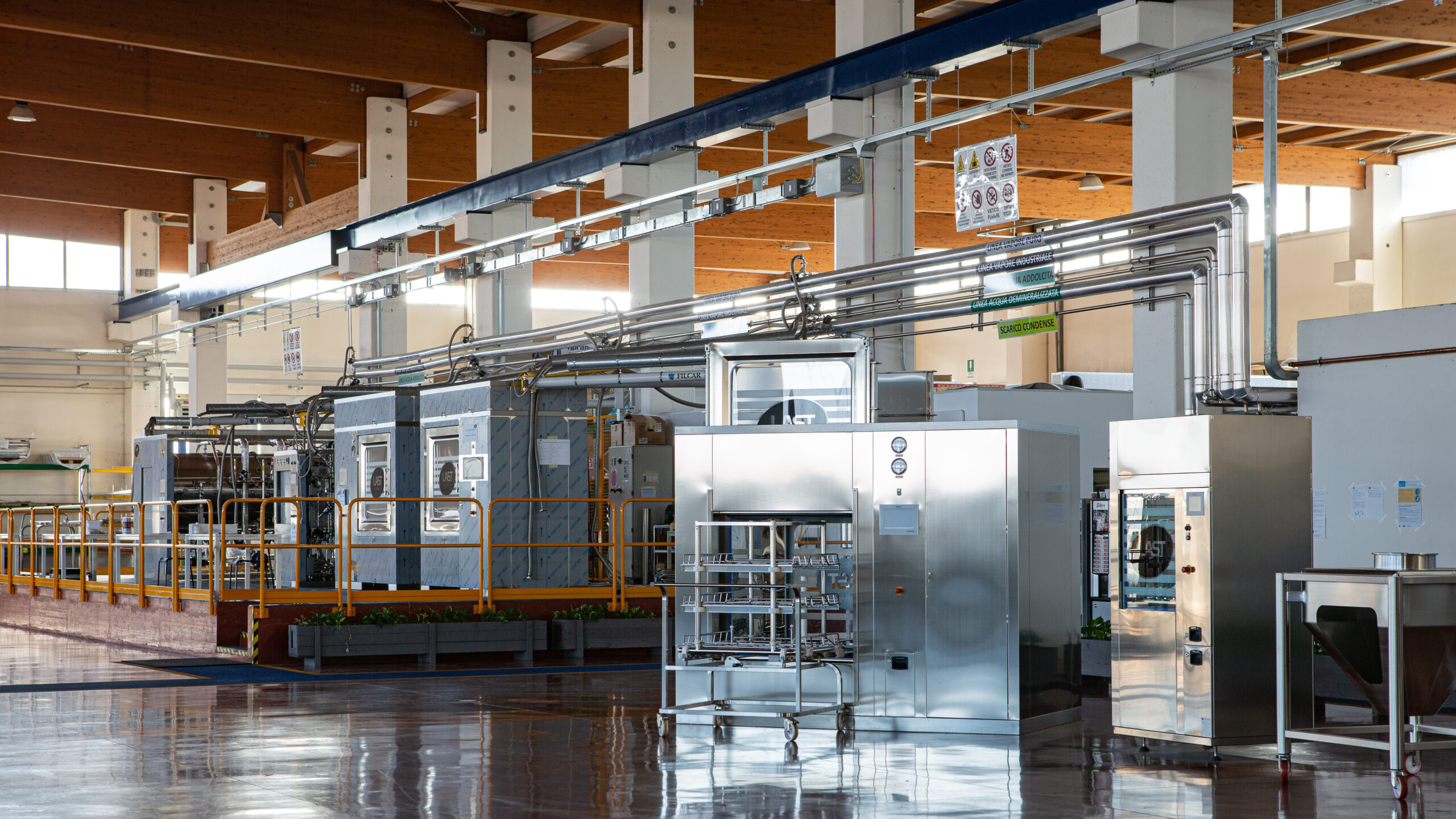
The pharmaceutical industry is undergoing a period of profound transformation, driven by process automation, digital integration and the introduction of increasingly advanced technologies in the management of production stages. In this context, process equipment plays a strategic role in ensuring operational efficiency and maintaining high standards of quality and safety throughout the entire drug production cycle. Among the companies that have contributed to the development of these technologies in recent years is LAST Technology, a firm specialising in the design and manufacture of systems for the pharmaceutical and biopharmaceutical industries and research laboratories. Technological innovation, process digitalisation and sustainability are now some of the cornerstones of the company’s strategy. We spoke about this with Massimo Castellarin, president and CEO of LAST Technology.
R&D is a key element of your development strategy. Can we talk about it?
«We design bespoke solutions, developed to integrate increasingly complex processes and meet specific customer requirements in terms of efficiency, safety and reliability. This translates into the creation of highly customised machines, in which automation and technological integration play an increasingly significant role. A distinctive feature of our business is the use of off-the-shelf components and software, chosen to ensure reliability and design flexibility. This approach allows us to configure equipment in a modular way and facilitates updates over time. The integration between hardware and software also enables the machines to be managed via remote monitoring and control systems, accessible from centralised servers or mobile devices, improving operational efficiency and reducing response times».
What are the main technological innovations you have developed in recent years?
«Among the innovations introduced, we can mention the use of acetone in washing processes, a particularly effective innovation for removing stubborn residues associated with pharmaceutical active ingredients. Then there are the “combo” solutions that integrate washing and sterilisation into a single process, particularly useful for elastomers and solid products, with advantages in terms of operational simplification and time savings. We have also introduced combined sterilisation systems using superheated water and steam, designed to treat both solids and liquids in rigid or flexible containers. For heat-sensitive components, low-temperature sterilisation technologies are available, based on the use of ethylene oxide or hydrogen peroxide. Finally, we have developed hot-air drying machines with an ATEX system, designed for the safe processing of potentially explosive solid products».
How do your solutions fit into the “automated factory” model?
«One of the most significant aspects concerns the integration of automation systems into handling and materials management processes. Today, it is possible to automate various operational phases through the use of LGV shuttles, anthropomorphic robots for pick and place operations, and automatic feed-in and feed-out systems, which reduce the need for manual intervention and improve the continuity of the production process. At the same time, we are working on integrating the equipment into digital plant supervision systems. Our machines can be connected to SCADA platforms for process monitoring and integrated into corporate MES systems, becoming part of a fully interconnected production ecosystem. To support this model, we have also developed proprietary software, based on standard market communication protocols, which allows all LAST Technology process machines to be incorporated into the corporate IT domain».
Does innovation also extend to the organisation of business processes, is that correct?
«In this regard, we have improved order management, making the entire product lifecycle more efficient. In a complex sector such as pharmaceutical equipment, the ability to coordinate information, technical documentation and operational activities is a strategic factor. This is why we have adopted a PLM (Product Lifecycle Management) platform that enables the integration of data, applications and operational methodologies throughout all project phases, from the concept design stage right through to plant commissioning and qualification (C&Q). This system allows the various company departments involved in order management to be interconnected, improving collaboration and information sharing. The introduction of PLM has reduced order management times by 20-30%, whilst also increasing the level of control over processes and technical documentation. To support operational activities, we have also introduced mobile IT workstations in the assembly and testing areas, enabling internal staff and visiting clients to quickly access technical documentation relating to individual orders. This approach helps to make processes more transparent, efficient and integrated with the quality management system».
Sustainability: a real goal
«Sustainability is an integral part of our corporate strategy and has been progressively incorporated into decision-making processes and development models – Castellarin explains– We draw inspiration from the United Nations Sustainable Development Goals (SDGs) with the aim of creating shared value for all stakeholders, integrating economic growth, social responsibility and attention to environmental impact. In recent years, we have launched several concrete initiatives in this direction. This commitment has earned the company the EcoVadis Silver Medal, one of the leading international systems for assessing sustainability performance. We have taken steps to improve the plant’s energy efficiency and energy supply. With this in mind, we have installed a 515 kWh photovoltaic system which, in addition to enabling self-sufficiency, has significantly reduced emissions. Our goal is to achieve carbon neutrality by 2030. Looking to the future, we will continue to invest in the development of increasingly efficient and sustainable technologies, whilst keeping a close eye on industry developments, where automation and artificial intelligence will play an ever-greater role in improving the efficiency and quality of production processes».


