Home Authors Posts by

Tiziana Azzani

2 POSTS

Eurostat. How are the Europeans?

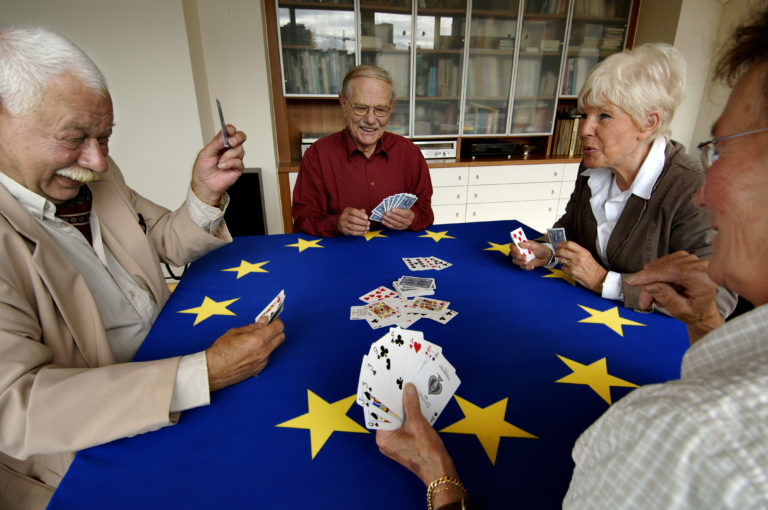
People live longer, women live more than men, but the “extra years” of life gained through increased longevity are spent in a bad heath status

© European Union, 2016

© European Union, 2016

One thing is sure: we live longer. During last 10 years the Europeans have gained almost two years of life, 1.8 years to be precise. According to the last picture taken by Eurostat (Quality of Life. Facts and Views. 2015), the average life expectancy has reached 80.3 years. Italy is among the longest standing EU countries (average 82 years), the second after Spain and before Cyprus and France. Belong to the Eastern Europe (Lithuania, Bulgaria, Romania) the Countries with the lowest life expectancy (average 75 years), although significantly longer compared to 10 years ago.

Women remain the most long-lived, with an advantage of 5.6 years compared to men. But if we consider the years without limitations related to a disease, the female advantage is reduced to 0.6 years, even lower than in 2005. Women therefore live longer, but those extra years are qualitatively damaged by a compromised health status.

Italy in the European average

The majority of Europeans (67.7%) assesses its health status as good or very good, while one European out of ten judges it poor or very poor. The data relating to Italy are located in the European average, while Ireland, Sweden and the Netherlands are the Countries where people feel better. Instead, the last place of the list is covered by the Countries of Eastern Europe where only 50% of people has a positive perception of its health status and one person out of five considers it bad or even very bad.

The health status, or rather its perception, tends to deteriorate with age, with the narrowness of the socio-economic and the onset of chronic disease conditions.

Women live longer, but more pessimistic

Men are more optimistic than women: more men than women (70.7% versus 65%) assess their health status as good or very good and a lower percentage of them judge it as bad or very bad (8.5% compared to 10.5%). The reason of the greater “pessimism” of women could be related to the higher risk to fall sick, caused by longevity, and thus spend more years in precarious or damaged medical conditions, especially when the economic conditions are such that they do not fully support medical needs. Women are also generally more aware of their symptoms and clinical situations than men who are reluctant to admit to having a health problem.

Relationship between socio-cultural condition and health status

The economic availability and a good cultural level encourage a positive view of their health. The good socio-economic conditions in fact provide better access to healthcare, increased awareness and implementation of a healthy lifestyle and awareness of the importance of prevention. By contrast, the percentage of patients with chronic diseases is highest among the poorest people (35.9%). Obviously, the two-way relationship can be interpreted in two opposite ways; on the one hand the most humble economic conditions cause the lower level of health, on the other hand is the onset of a chronic disease that causes a problem of poverty (inability to work or loss of work activity). Work is another factor that significantly influences the perception of the health status. People who are following an education or training program (9 out of 10) or are full-time employees (8 out of 10) have the most positive view of their health status. The situation becomes progressively less positive for freelancers, part-time employees, the unemployed and the retired; only 40% of them consider their health status good or very good.

Chronic conditions

Although directly related, there is not always a correspondence between the real state of health and how it is perceived. In 2013, even if a third of Europeans (32%) claimed to suffer from a chronic debilitating disease (+2% compared to 2005), only 9.5% of the population considered his health status bad or very bad.

Accessibility to health systems

Almost 8% of Italians can not meet their own medical needs because of economic problems or the difficult access to treatments (distance to hospitals, length of the waiting list, etc.). This percentage is much higher, more than double, compared to the European average (3.6%) and is approaching to some Eastern European countries (Romania, Bulgaria, Poland, Estonia).

Mortality

The main causes of death are confirmed cardiovascular disease, chronic obstructive pulmonary disease (COPD) and cancers (breast cancer for women); the incidence have been reduced over the last 10 years. In particular, the male cancer mortality has dropped by 10% (female cancer mortality 5.5%) and the mortality caused by ischemic diseases has been reduced by 28.5% (30.4% for women).


[metaslider id=1420]
Technology transfer. Challenges and opportunities for Pharmabiotech market

Pharma World Magazine begins a journey of discovery of the main actors of Technology Transfer in Italy interviewing Maria Luisa Nolli, CEO NCNbio

Technology transfer. Large group of people in the form of gears.
Technology transfer

Innovation is the way to growth in a modern economic system, while research and development are the engine that ensures the continuity and sustainability. Because of biotechnological transformation, these activities have gradually become more complex compared to the past characterized by chemically synthetic drugs; now the research phase remains in University which has the knowledge and scientific expertise, while the development phase of a new drug, medical device or diagnostic device remains in the Biotech Company, which has the facilities and expertise to bring the product to market.

Who then owns the innovative product? Who protects the intellectual property and especially how patients can be ensured to receive all benefits coming from the evolution of biomedical science? The innovative process has to be aligned with regulation processes of market and with those of assessment which mark the technology access in practice. They have also to consider the appropriateness and economic sustainability of health systems. The creation of a closer relationship between the research world, institutions and the business system, the so-called “triple helix”, is the determining factor for the development of innovative capacity particularly in knowledge-intensive sectors. In other words, technological innovation has to be promptly transferred into clinical practice through specialized structures dealing in Technology Transfer, such as a “missing link” between University and Company. It is a new model that has been spreading rapidly, especially abroad and overseas. As Brady Huggett wrote in an article published by Nature Biotechnology, in the last few years in American Universities have been implementing a radical change characterized by of investment of large amounts of capital to expand and structure spaces devoted to technology transfer, to move the objectives and change the business model resulting in start-up and becoming more active in business development processes (Reinventing tech transfer. Nature Biotechnology 2014).

Maria Luisa Nolli
Maria Luisa Nolli

We talked with Maria Luisa Nolli, co-founder and CEO NCNbio, a new start-up that deals with technology transfer in biotechnology. With Maria Luisa Nolli, Pharma World Magazine begins a journey of discovery of the main actors of technology transfer in Italy.

What is Technology Transfer?

The technology transfer is usually defined as all the activities of research centers aimed at the assessment, protection and commercialization of technologies and the management of intellectual property developed within research projects conducted by University. Today the biotech world can not do without these activities, because all biotechnology products, whether drugs, medical or diagnostic devices, have a high scientific and technological content that requires skills that Company does not always have alone. The only scientific knowledge does not guarantee the research product to arrive on the market and therefore the access of a patient to an innovative therapy. The link between the University and the Company is precisely the Technology Transfer.

Why do we need of a structure dedicated to technology transfer and not just a collaboration between University and Company?

First of all, we need new forms of investment to support especially the initial stages of development of a product on which the Company hardly bet. Indeed, usually the Company invests on a drug not before phase II, after the clinical trial in the case of a medical device and only after the demonstration of feasibility in clinical practice in the case of a diagnostic. The financial support can obviously come from different sources; these include government funding programs (in Europe the current Horizon 2020 program, in the USA the NIH programs). Other sources of funding may result from so-called venture capitals, venture capital financing the start-up or growth of activities in the high development potential sectors, or from small Biotech companies which start to accelerate the development of a product until it reach an interesting step for Big Pharma. This scenario places the technology transfer activities. This way if not properly supported can become very difficult and tiring, that’s why besides the financial support needed fiscal measures and incentives to intellectual property protection. Recently in Italy came into force measures such as the status of young innovative enterprise and the patent box that aim to facilitate this initial path.

What does Technology Transfer do?

The process is complex and involves different professionals; the activities depend on each individual project and the actors that go around. Technology transfer is not only about the transition from University to the Company, but specifically involves all phases of the development chain, to the market and often even further because all phases are very high-tech. I refer, for example, to the time when the project is transferred to a spin-off and from the spin-off to the Company. But the technology transfer does not end when the project enters into the Company, because for all biotech products (drugs or diagnostic devices) it’s important to monitor the maintenance of their original characteristics.

The actors involved in technology transfer are many and with different skills and include: basic researchers, project managers, financial, lawyers, regulatory experts, persons with expertise in trademarks and patents, and some who have already gained industrial experience. The aim of this multidisciplinary team is to create an ad hoc process that allows the selected project to move from basic research to become a product with suitable characteristics to the placing on the market.

The objective of Technology Transfer is thus identify research projects that can become interesting products for the market. At a time of crisis and general paucity of funds, we do not risk the abandonment of basic research by University?

I’s important that UniversitY basic and applied research are balanced; only in this way can be a “continuum” between creativity, innovative projects, protection of intellectual property through patents and their exploitation to the market. This is an internal academy management problem.

Who are the main actors of Technology Transfer in Italy?

In Italy there are Offices/Departments within Universities, Research Centers as well as technology parks, entirely dedicated to technology transfer (TTO Technology Transfer Office). Examples are the TTO San Raffaele Hospital in Milan, The TTO of University in Milan and Bologna, the Bioindustry Park Silvano Fumero in Ivrea, the Polytechnic of Milan or Tuscany Life Science at Siena and many others. Recently they are then rising private companies, who deal with technology transfer, such as TTFactor, which manages innovation to IFOM (FIRC Institute of Molecular Oncology) and IEO (European Institute of Oncology). The involvement of these structures within or close to the Research Centers can help you decide where to invest in the protection of intellectual property directing it to a product idea. But of this we will discuss in more detail and depth in one of the next stages of our “journey” to discover the Technology Transfer.


Newsstand

  • Supplement to n.5 - October 2025 NCF International n.2 - 2025
  • NCF International n.1 - 2025
  • Supplemento to n.9 - October 2024 NCF International n.3 - 2024