Home Authors Posts by Giuliana Miglierini

Giuliana Miglierini

208 POSTS 0 COMMENTS

The European Council adopted its position on the Pharmaceutical package

The European Council adopted on 4 June 2025 its position on the new rules for the EU’s pharmaceutical sector. The mandate will allow the negotiation phase to begin in order to reach a final agreement on the reform. According to the approved text, regulatory data protection should last eight years, while regulatory market protection will add a further year (extendable to two years upon achieving  pre-defined key objectives). The Council also introduced an obligation to supply, giving member states the power to require the marketing authorisation holder make a medicinal product available in sufficient quantities to cover the needs of patients in the member state.

As for the transferrable exclusivity vouchers, the Council’s position states that they can only be used in the fifth year of the regulatory data protection period, if the MA holder can demonstrate that the annual gross EU sales of the product were not greater than €490 million in any of the preceding four years. The Council has addresses access to market for generics and biosimilars by clarifying the scope of the Bolar exemption and expanding it to include submissions for procurement tenders.


The AESGP report on the 2024 of the self-care industry

2024 marked the 60th anniversary of the Association of the European Self-Care Industry (AESGP), which has spent the last six decades providing patients with the sustainable, safe and effective self-care products to help them self-manage a wide variety of ailments and everyday health issues.

According to the AESGP’s 2024 annual report, the sector manages over 4,000 non-prescription medicines, based on more than 200 different active pharmaceutical ingredients and their combinations. At least thirteen switches took place in ten different European countries in 2024.

Last year, 4.7 billion packs of non-prescription medicines were sold for the self-management of 1.2 billion minor health issues per year (e.g. allergies, gastrointestinal disorders, cough and cold, etc). 

The self-care industry comprised in 2024 more than 2,000 companies operating in Europe, half of which were small- and medium-sized enterprises. The sector includes also producers of food supplements (1.3 billion of packs of minerals and vitamins sold in 2024) and self-care medical devices (2.2 billion packs purchased in Europe every year). The AESGP report mentions overall savings of €34 billion resulting from the use of non-prescription medicines.

The new EU Startup and Scale-up Strategy

0

The European Commission launched on 28 May 2025 its new EU Startup and Scale-up Strategy, “Choose Europe to Start and Scale”, which forms part of the broader ‘Choose Europe’ initiative aimed at attracting and retaining talents. 

Startups and scaleups are essential for improving the European competitiveness, and driving innovation and sustainable growth. Nevertheless, a significant gap remains with the main international competitors with regard to the interest of investors in supporting the growth of startups and scaleups in the EU. 

The Strategy aims to support these companies throughout their lifecycle. To reach the ambitious target, it is essential to create an innovation-friendly environment, characterised by lower fragmentation and administrative burdens. A key measure proposed by the Commission is the introduction of a European 28th regime to simplify rules and reduce the cost of failure, together with the creation of a larger and more integrated EU venture capital (VC) market and greater involvement of European institutional investors. The Lab to Unicorn initiative will support the creation of the European Startup and Scaleup Hubs to help connect university ecosystems across the EU. The Blue Carpet initiative will promote entrepreneurial education and other factors that encourage talent attractivenes

The FDA has launched its generative AI Elsa

Elsa is the name of the new generative artificial intelligence tool launched on 2 June 2025 by the U.S. Food and Drug Administration (FDA). The launch occurred just a few weeks after the completion of the pilot project, which aimed to validate the use of Elsa to support the work of FDA’s staff (e.g. scientific reviewers, investigators, etc). 

Built within a high-security GovCloud environment, Elsa provides secure access to internal documents, while ensuring that all information remains within the agency. The models are not trained on data submitted by the regulated industry, thus safeguarding the sensitive research and data handled by FDA staff.

Elsa is an AI tool powered by large language models designed to assist with reading, writing, and summarising. According to the FDA, Elsa will be used to accelerate the review of clinical protocols, shorten the time taken for scientific evaluations, and identify high-priority inspection targets. For example, Elsa can summarise adverse events to support safety profile assessments, perform faster label comparisons, and generate codes to help develop databases for nonclinical applications. 

The 2024 EMA’s annual report

0

EMA’s annual report 2024 gives insights into the Agency’s strategic priorities and contributions to public and animal health in the European Union (EU). The digital report outlines the most important highlights regarding the evaluation and monitoring of human and veterinary medicines and a selection of key figures. The narrative is complemented by an interactive timeline of milestones in 2024, with advanced functionalities that allow readers to explore each topic in more depth by accessing additional documents, audio-visual materials and infographics.

In 2024, EMA recommended 114 medicines for marketing authorisation. Of these, 46 had a new active substance which had never been authorised in the EU before. Among these are a number of medicines that stand out due to their contribution to address public health needs or the innovation they represent.

On the veterinary side, EMA recommended 25 veterinary medicines for marketing authorisation – the highest number of recommendations in a year. Of these, two had a new active substance. 14 were vaccines, including seven that had been developed using a biotechnological process.

Data and AI in medicines regulation, the workplan to 2028

The joint workplan “Data and AI in medicines regulation to 2028” was published by EMA and the Heads of Medicines Agencies (HMA) at the beginning of May 2025. It sets out the general framework that the European medicines regulatory network should use to leverage large volumes of regulatory and health data. The plan also discusses new tools that may prove useful to encourage research and innovation, and support regulatory decision making.

The workplan translates the objectives of the European medicines agencies network strategy to 2028 into a concrete roadmap for managing, analysing, and sharing data across the network. It also provides a framework for coordination in response to new EU legislative initiatives, such as the pharmaceutical legislation, the European Health Data Space (EHDS), the Interoperable Europe Act and the AI Act.

Planned initiatives include strengthening the network’s data analytics capabilities to generate high-quality evidence and reviewing methodologies such as biostatistics, modelling and simulation, AI and pharmacoepidemiology. Genomic data, synthetic data, digital twins data and patient experience data will also be considered, as well as the master data needed to increase the interoperability of data assets and systems. The workplan will also advance and harmonise the implementation of the Product Management Service (PMS), as well as evaluating AI throughout the entire medicine lifecycle.

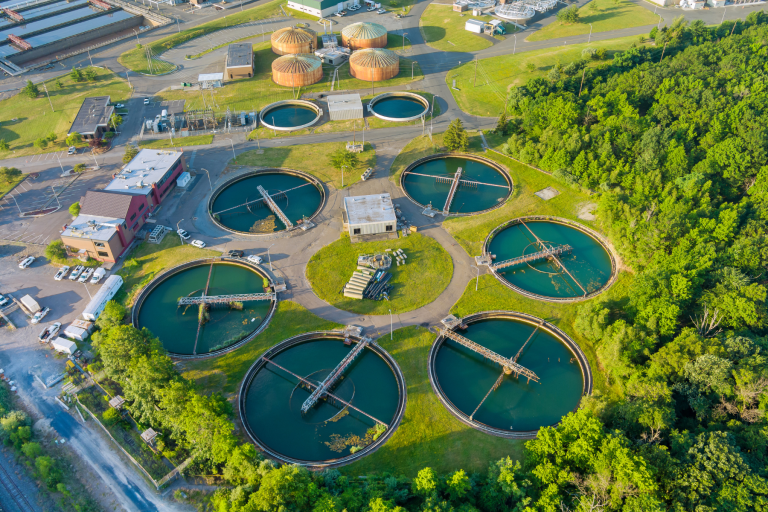
Micropollutants in urban waste waters

A new report, prepared by Ramboll Deutschland GmbH, shares new findings on the expected impact of data collection and assessment for micropollutants in wastewater. A comparison with the EU Commission’s October 2022 Impact Assessment report indicates that the large number of chemical substances falling under the definition of micropollutant originate from many different sources, not just the pharmaceutical and cosmetic sectors. According to the planned revision of the EU Urban Wastewater Treatment Directive (UWWTD), these are the only two sectors impacted by the Extended Producer Responsibility (EPR) scheme. According to the Ramboll report, the concentration of detected micropollutants mostly falls within the ppb to low ppm range, varying significantly depending on various factors.

Substances of pharmaceutical origin were mostly found in the low ppb or even ppt (ng/l) range. The study also highlights that, in waste water analysis, wide chemical target screening programs (>200 analytes) may not necessarily capture the full picture. From this perspective, pharmaceuticals are the most intensively studied group of substances classified as micropollutants, which could lead to other sources and micropollutants being underrepresented. Therefore, it would be necessary to identify all known and unknown micropollutants from all sources, using a combination of non-targeted and suspect screening approaches, as well as quantitative analysis (e.g. by targeted methods).

Preparedness and Medical Countermeasures, two new strategies by the EU Commission

The health sector plays a central role in the availability of tools and resources to tackle emerging threats that may affect the EU. Preparedness is essential to respond to possible emergencies, and requires the implementation of a wide range of coordinated actions in different interconnected fields. The European Commission launched the EU Preparedness Union Strategy on 26 March 2025, which includes 30 key actions and a detailed Action Plan. Among  the many planned objectives are the availability of minimum preparedness criteria for essential services such as hospitals, and stockpiling of critical equipment and materials. An EU Crisis Hub should also be created to improve integration of existing EU crisis structures. Better public-private cooperation should support the creation of a Preparedness Taskforce and the formulation of emergency protocols to ensure the rapid availability of essential materials, goods, and services, and secure critical production lines.

The Commission also launched a call for evidence aimed to support the development of the new Medical Countermeasures Strategy (MCS), which is part of the Preparedness Strategy and specifically addresses threats to public health. This strategy will focus on the actions needed to ensure the availability of essential products to face health emergencies, such as vaccines, medicines, diagnostics, and personal protective equipment. The MCS should also contribute supporting strategic autonomy and innovation in health-related sectors.

EPO, a map of specialised investors and free flow of data with the EU

The European Commission proposed in March 2025 the first EU adequacy decision on the level of data protection (i.e. a level of protection for personal data essentially equivalent to that applying within the EU) concerning an international organisation, the European Patent Organisation (EPO). The draft adequacy decision opens the way to the free exchange of data between the UE and EPO, with reference to the procedures to obtain the granting of European patents.  The draft text of the adequacy decision has now to pass the scrutiny of the European Data Protection Board (EDPB), and possibly also of the European Parliament, and the approval of a committee of representatives of the EU Member States before final adoption.  

In the meantime, the EPO’s Observatory on Patents and Technology has published a study addressing the challenges that tech startups face in raising public and private funding. The European situation is analysed in comparison to the US. Findings show that public investors are essential to Europe’s innovation ecosystem, working alongside private investors. The report also introduces the Technology Investor Score (TIS), a new metric representing the proportion of companies in an investor’s portfolio that have filed patent applications. A higher rating is representative of higher degrees of investor specialisation in patented technology. According to the study, 88% of European investors have portfolios that include companies with patent applications. 

Source: European Commission, European Patent Office

Request for an urgent EU Critical Chemicals Act

A briefing note signed by seven European member states (Czechia, France, Hungary, the Netherlands, Romania, Slovakia, and Spain) during the Competitiveness Council on 12 March 2025 underlines the major crisis affecting the European chemical industry. The increase in energy costs and competition from non-EU countries resulted in a 12% drop in production between 2019 and 2023. Twenty steam crackers may be shut down by 2035, possibly affecting 50,000 jobs in the petrochemistry sector. The non-paper presents the rationale for a “Critical Chemicals Act” to be issued by the European Commission, focused on a list of about fifteen strategic molecules that are key for preserving the resilience of Europe.

These include petrol derivatives (etilene, propilene, butadiene and benzene), natural gas derivatives (methanol and ammonia), inorganic molecules (chlorine, sodium hydroxide, sulfur, silicon, sodium carbonates, hydrofluoric acid) as well as the two aminoacids lysine and methionine. The Critical Chemicals Act would provide support schemes dedicated to chemical plants that require decarbonisation and modernisation investments and encourage transformation of the chemical industry and disruptive innovation, particularly in the development of low-carbon molecules.

Newsstand

  • Supplement to n.5 - October 2025 NCF International n.2 - 2025
  • NCF International n.1 - 2025
  • Supplemento to n.9 - October 2024 NCF International n.3 - 2024