Home Authors Posts by

Giuliana Miglierini

112 POSTS

Trends in risk containment

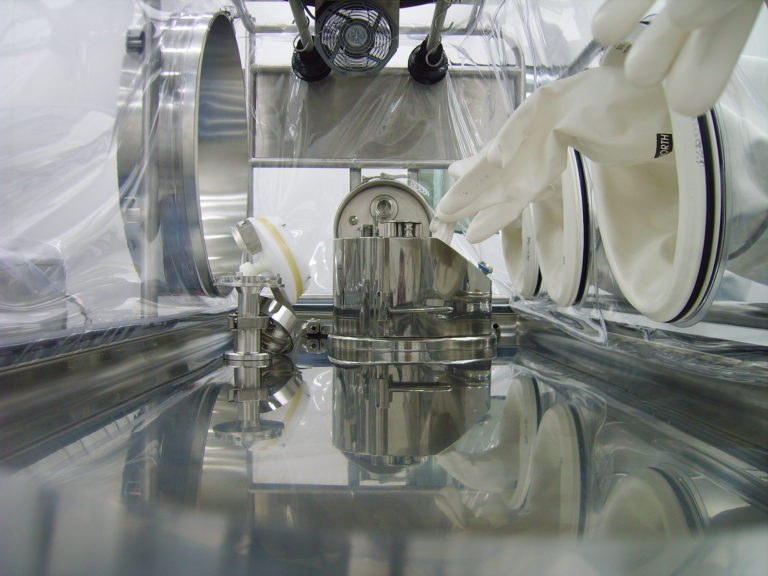
odern research labs and production facilities may look a little bit claustrophobic as they are often segregated in closed box, the so-called isolators, in order to keep workers out of the contact with high potency active pharmaceutical ingredient (HPAPI). Workers themselves may look like Ebola’s doctors, as they are completely dressed with protective suits and masks. Glove boxes and ports are the only possibility to access the production compartments. Isolators represent the last frontier in the application of risk containment to pharmaceutical production as a safety measure (figure 1).

PENTAX Image
Figure 1 – Credit CTP SYSTEM

High potency active ingredients are a market segment showing a strong growth at the global level (+10% per year), being many new medicines anti-tumoral and anti-proliferative agents. The regulatory framework is rapidly evolving and increasingly asks for great attention toward the integration of GMP, quality and safety procedures.

Guia Bertuzzi, Ispe Italy
Guia Bertuzzi

The need to avoid cross-contamination between different medicinal products, one of which may be based on an HPAPI, is another driver force toward the adoption of containment measures.

Typical high potency active ingredients are hormones or cytostatic drugs: they may have a carcinogenic or mutagenic effect or cause genetic mutations if handled in relatively high quantities without suitable protection.

Each production phase has to be carefully evaluated as for its related risk; initial planning of production facilities should take into consideration all the measures needed to remove this risk. The analysis not limited just to the production plant, but it may concern also the warehouse management, cleaning processes and the maintenance of the equipment.

Guia Bertuzzi, member of the Board of ISPE Italia (the Italian affiliate of the International society of pharmaceutical engineering) and product manager at IMA Active, tells about latest trends in risk containment.

The level of containment

As we said, careful planning of all operations is the first step toward a good containment’s strategy. «The needed level of containment should be decided right from the beginning of the planning, in order to avoid too radical measures that may result inconvenient for workers to operate», tells Bertuzzi.

To help the decision, the containment’s pyramid graphically resumes the different levels of danger to be used for risk analysis (figure 2). These have to be correlated to time exposure and operative layout. The occupational exposure level (OEL) is the parameter upon which the decision is taken: an OEL value minor or equal to 10 mg/m3 calls for the implementation of more rigid risk containment measures.

R08_TWINVALVE_EN.indd
Figure 2


OEL is just one among several different parameters available as international standards in order to measure and classify the toxicity of the active ingredients and of other chemical substances. Operational exposure limit usually refers to inhalation exposure and it is used as an indication of the maximal concentration of the substance in the air at working places that allows no risks for the health. OEL levels change for oral or parenteral exposure. Exposition time is calculated on the basis of eight hours per day (40/h per week) over the entire life span. International guidelines do not indicate a precise requisite as for exposure levels during production.

«There are several tables of operational exposure levels available, prepared by different international institutions. The limit of exposure may differ according to the layout of the production. – tells Guia Bertuzzi – Production plant companies prefer to use the occupational exposure band (OEB), as in its definition the toxicity of the pure substance is considered. This is a useful information to start risk analysis and to select procedures and plants that are the more suited for the specific case».

What needs to be contained

The working environment is the sum of the room, the equipment and the people working in it. «According to regulatory guidelines, it is necessary to adopt suitable protections for the working space and the equipment, in order to facilitate as far as possible the free movements of the workers – adds Bertuzzi (see also box 1). – Starting from an OEB level of 3, protective measures have to be directly applied on the machines: they start to look different. The planning is aimed to keep separated the process area and the technical area containing the auxiliary apparatus needed to run the machines. Manual operations should be limited as far as possible. Glove ports and isolation barriers are used if it is necessary to allow access for the operator. High level of automatic control is also put in place. Cleaning systems are also completely automatized. Absolute air filtration is used to manage air movements between the external and interior of the isolator, a procedure that is involved at various degrees with all operations on powdered high potency ingredients».

Air flow control

Air flow is one of the more critical points that need to be considered in risk analysis. The bigger the scale of the operation, the greater is the quantity of air involved, thus requiring more stringent safety measures. The solution more widely used is the filtration of suspended particles using absolute filters, a highly complex technique to be put in place. «A pressing machine, for example, moves a very small quantity of air as the pill is created: a simple aspiration system, with a limited filtering surface, is enough. Fluid belt machines, used for powder granulation and drying, are the more difficult to be managed, as they work with thousands of air cubic meters each hour. The air that could have become in contact with the HPAPI needs to be filtered before it can be eliminated. These filters have a surface of hundreds of thousands of square meters and they too need to be handled under containment», explains Bertuzzi.

The monitoring of the efficacy of containment is possible thanks to detection devices located close to critical points of the equipment or on the workers’ dressing.

Unknown toxicity substances

New substances coming from the research labs often have a still incomplete toxicity profile. It is thus more difficult to establish definitive levels of exposure to be used for risk analysis. According to Guia Bertuzzi, there are two opposite behaviours to face this issue: «Big multinational companies can invest great sums for the production facilities: they ask for the maximal containment. Other companies, often working at preliminary R&D on small quantities of substance (max 1 Kilogram) and without 24H production needs, consider the risk level to be lower, as time exposure is shorter. There are still some manual operations difficult to make safe as for the equipment is concerned: the choice is thus to protect the workers with an appropriate dressing».

The risk analysis

The attention of pharma industry toward the adoption of containment measures has increased in parallel to the increasing regulatory requirements. «A first phase, some years ago, saw an initial rush: any solution was suitable regardless to the type of the production. Many companies invested a lot of money without reaching the goal, time and costs of production also increased. A later phase saw a greater attention to risk analysis and a better planning of the containment strategy», further explains ISPE Italia representative.

In the production of solid pharmaceutical products, for example, the critical steps are the manipulation of the pure active ingredient and the mixing phase coming before the definition of the final pharmaceutical form. «Steps where the manipulation of the active ingredient is higher or it takes a longer time are the more critical ones, as well as weighting procedures. For small quantities, the operation is completely segregated inside the isolator. Completely automated weighing machines are available for bigger quantities. The risk level progressively decreases as the active ingredient is diluted upon mixing with the excipients», tells the expert.

Simple solutions are also available, as for example disposable flexible isolators; they get wet and are discharged at the end of the production. «This type of solution is suitable for production facilities already in place, that were not built in order to facilitate containment of the product», adds Bertuzzi.

The so-called make-a-batch is a theoretical simulation of the entire production process that can help running a good risk analysis. (box 2) The simulation considers in deep detail each single step of the process, even the more “forgettable” ones, in order to better value their potential impact.

The Standardized Measurement of Equipment Particulate Containment guideline (SMEPAC) may help in the periodic monitoring of the efficacy of the containment measures adopted.

The type of production may also condition the modalities of containment, as Guia Bertuzzi tells: «There is no need for separation of production areas if the plant is fully dedicated just to one product; there is a greater tolerance also for the flows of materials and workers. In the case of a multi-product plant, there is need to consider the risk of cross-contamination: working environment should be partitioned in different areas, one for each process. Cleaning, too, becomes a critical operation to pay a great attention to».

A new containment-based production plant has to be validated using the standard validation procedures. There is still a debate open on the reliability of containment measures, after validation and over a long period of time. «Two are the key elements of a production chain, not only valid for the pharmaceutical industry. In my opinion, the future challenge shall combine high standard levels for production, plant’s flexibility and cost containment. An approach more aware toward containment is now available. The multi-disciplinar risk analysis asks for the participation of all internal functions, and even of suppliers of equipment and materials. Technical solutions are thus the most appropriate ones without being overestimated», remarks Bertuzzi. 

Personal protection equipment

Personal protection equipment is used to reduce the risk to enter in contact with dangerous substances. Personal protection equipment shall be used each time it is impossible to avoid the risk, or to reduce it, using preventive technical measures, collective protection equipment or different modalities of work organisation.

Production and risk analysis

The Baseline® Guide: Risk-Based Manufacture of Pharmaceutical Products (Risk-MaPP) has been released by ISPE; it is based on the provisions of the ICH Q9 Quality Risk Management. The guideline helps in the management of the cross-contamination risk, so to reach a good compromise between product quality and safety for workers. (source ISPE)

Excellence in drug delivery

0
Nicholas A. Peppas Author: Ozfisher
Nicholas A. Peppas
Author: Ozfisher

The 2014 Giulio Natta Medal in Chemical Engineering has been assigned by the Politecnico of Milan to Nicholas A. Peppas. The scientist, graduated in 1971 in biomedical engineering at the Athens School of Engineering (Greece), then moved to the US to reach doctoral degrees at MIT. He is currently covering one of the just six Cockrell chairs in Engineering and is the director of the Institute for Biomaterials, drug delivery and regenerative medicine of the Austin University, Texas.

As he himself told during the Lectio Magistralis given at the Politecnico, he chose to become a biomedical engineering while looking at the first heart transplant by south african Christian Barnard in 1967.

Peppas pioneered many fields in medical technology’s innovation: plastic materials for contact and intraocular lenses, special membranes for artificial kidneys, cartilages, systems for the oral delivery of insulin, calcitonin and interferon beta are just few examples of the many products which have been created in his labs. Many of these had a profound impact in the history of drug delivery and pharmaceutical development. More than 40 years later, Nicholas A. Peppas is still fully active in research with many new ideas to develop. His interests are now directed in maximising the potentiality of nanotechnologies to create the next generation of drug delivery systems, using a multidisciplinary approach to develop innovative solutions and solve complex problems.

The driving force that moved Nicholas Peppas to continuously invest energies and create new solutions for medical sciences, he told during the lecture, has always been the desire to help patients to reach a better quality of life, even if a disease is present. Patents and products coming from Peppas’s labs have been the subjects of many important deals in the pharma industry. Professor Peppas’s research articles reach more than 69 thousand citations, more than an half (36779) starting from 2009 onward (Google Scholar); the most cited paper is dated 19831 and it represent a milestone in the explanation of release mechanisms from a polymeric matrix of porous hydrogel.

Towards intelligent biomaterials

The future is focused of the creation of “intelligent” biomaterials using nanotechnology, a mean that, according to the scientist, might even allow remote diagnosis and therapy. A modern system of drug delivery and controlled release, he explained during the Lectio Magistralis, is no more based just on a careful choice of the polymeric matrix used to trap the active ingredient and on its dissolution properties. When we speak of “intelligent” biomaterials, the term it is not referred to as “artificial intelligence”. Innovative biomaterials are able to selectively recognise cells and deliver the drug on the basis of their chemical-physical properties.

An improved molecular design is the key to open new frontiers in drug delivery systems, said Peppas: multinational pharma companies shall use this approach as a plus for pharmaceutical development, to keep their innovative potential at a very high level and to renew expiring patents as a way to resist to competitive pressure coming from generic companies.

Peppas’s research on biomaterials which are able to modulate drug release by mean of their differential sensibility to pH, ionic strength, solvent composition or temperature, dates back to the ‘702,3. The future points toward personalised drugs and a “patient-friendly” model of medicine4: patient’s needs have to be considered the main driver for innovation, in order to increase quality of life. Professor Peppas made the example of insulin delivery, a very inconvenient therapy for diabetic patients because of the need of (multi) daily injections that may cause the formation of diffuse hematomas. The new oral formulations of insulin that he created is able to pass unaltered through the acidic ambient of the stomach and release the hormone just upon arrival at the small intestine. Not only insulin: at the Austin’s labs the group is working at delivery systems for other proteins, i.e. calcitonin to treat osteoporosis, growth hormone against dwarfism, coagulation factors VIII and IX for haemofilia and interferon b for multiple sclerosis.

All these innovative drug delivery systems are based on various combination of mucoadhesive polymer hydrogels and nanoparticles able to increase drug’s bioavailability5. Insulin-loaded microspheres have been tested in vivo on rats6, showing their capacity to resist to the stomach’s drastic pH conditions and to release insulin in the small intestine. The technology, explained Peppas, makes use of pH gradients within different body districts and allowed for a decrease of 40 percent in glucose level in rat’s blood.

Another technique used to increase intestinal bioavailability of proteins makes use of carrier nanoparticles functionalised with carbohydrates, wheat germ’s agglutinin or block copolymers, all having mucoadhesive properties in order to favour the ability to pass the intestinal barrier through capillary blood flow and undergo cellular uptake.

Nanotechnologies may also help, according to professor Peppas, in the creation of micro-infusion pumps, that patients may carry at their belt, needing smaller volumes thanks to the increased volume-surface ratio.

Intestinal drug targeting using siRNA

The so-called small interfering RNA (siRNA) are double helix small RNA fragments coding for approximately 20 amino-acids; the fragments have negative charge and are easily hydrolysed. siRNA are involved in the degradation of complementary mRNA; they favour gene silencing and they may be useful for the treatment of diseases involving altered gene expression8.

Peppas’s group is working to achieve site-specific oral delivery systems for siRNA, a complete break-through in innovation as none of the currently undergoing 24 clinical trials on siRNA is using oral delivery of the active ingredient. The new biomaterials should have a low cost of production and would allow high compliance to treatment by patients, said Peppas. The project is highly challenging, as gastrointestinal tract is characterised by a dynamic pH gradient (approx. 2 – 7,4); residence time too is highly variable. The drug delivery system shall allow the drug to pass the intestinal mucous barrier while remaining stable in the area of inflammation. Once the vector has reached the target cell, endocytosis shall occur and the drug shall be finally released within the cytoplasm.

The new biovectors showed their ability to win these challenges and they may find future use, said their inventor, to treat Chron’s disease or ulcerative colitis. To solve the problem, researchers associated a polyanionic, pH-sensitive carrier to a protective hydrogel that can be degraded by digestive enzymes: carboxylate groups located on the surface of the biomaterial are protonated at the acidic pH of the stomach. The so-formed hydrogel protects the more internal layers containing the nanogel-incapsulated active drug. Once into the intestine, the microgel swells and the internal nanogel containing the siRNA is thus released. This nanogel has a polycationic nature, thus facilitating cellular uptake and cytosolic release of the siRNA. The advanced biomaterial is thus consistent of three different layers: the core siRNA active ingredient, its protective polycationic nanogel and the external polyanionic microgel, and has been obtained by photopolymerisation coupled to micronisation techniques9.

Nicholas A. Peppas has spent his life to create innovative systems able to recognise and use thereof the different environmental conditions within the human body. The innovative biomaterials created in his labs had a profound impact on drug delivery and greatly helped to improve patient’s compliance and quality of life. These have been, for the Politecnico of Milan, the motivations for awarding him with the 2014 Giulio Natta Medal.


References

  1. R. Korsmeyer, R. Gurny, E. Doelker, P. Buri, N.A. Peppas, Mechanisms of solute release from porous hydrophilic polymers, Int. J. Pharmaceutics, 15, 25-35 (1983)
  2. N.A. Peppas, E.W. Merrill, Crosslinked poly(vinyl alcohol) hydrogels as swollen elastic networks, J. Appl. Pol. Sci. 21, 1763 (1977)
  3. T. Tanaka, Collapse of gels and critical end-point, Phys. Revs. Letters, 40, 820 (1978)
  4. R. Langer, N.A. Peppas, Advances in biomaterials, drug delivery and bionanotechnology, AIChE J., 49, 2990-3006 (2003)
  5. N.A. Peppas, Vecteurs de médicaments innovants et intelligents: leur applications pharmaceutiques, Ann. Pharm. Fr, 64, 260-275 (2006)
  6. A.M. Lowman, M. Morishita, M. Kajita, T. Nagai, N.A. Peppas, Oral delivery of insulin using pH-responsive complexation gels, J. Pharm. Sci., 88, 933-937 (1999)
  7. K.M. Wood, G.M. Stone, N.A. Peppas, Wheat germ agglutinin funtionalized complexation hydrogels for oral insulin delivery, Biomacromolecules, 9, 1293-1298 (2008)
  8. J.M. Knipe, J.T. Peters, N.A. Peppas, Theranostic agents for intracellular gene delivery with spatiotemporal imaging, Nano Today, 8, 21-38 (2013)
  9. J.C. Knipes, N.A. Peppas, Multiresponsive polyanionic microgels with inverse pH responsive behaviour by encapsulation of polycationic nanogels, J. Appl. Polym. Sci., 131, 40098 (2014)


The Natta’s Lecture

Natta’s Lecture is an award that the Department of Chemistry, Materials and Chemical Engineering of Politecnico di Milano assigns every year to an eminent Professor, who has distinguished himself in the world for his original studies and researches, and has reached outstanding achievements in the main areas of interest for the Department.

This award was first established in 2013 to celebrate the 50ths of the Nobel prize to Giulio Natta. The awarded scientist gives Lectio Magistralis at the beginning of the academic year of the Politecnico and a medal is assigned to him.

(source: Politecnico di Milano)


An outstanding records of success

Nicholas A. Peppas is the Cockrell Family Chair in Engineering No 6. He is professor of Chemical Engineering, Biomedical Engineering and Pharmacy and chairman of the Department of Biomedical Engineering, and Director of the Institute of Biomaterials, Drug Delivery and Regenerative Medicine of the University of Texas at Austin.

Peppas holds a Dipl. Eng., National Technical University of Athens (1971), a Sc.D. from MIT (1973), honorary doctorates from the Universities of Ghent (Belgium), University of Parma (Italy), University of Ljubljana (Slovenia) and University

He is the 2012 Founders Award recipient of the National Academy of Engineering (NAE). Peppas is an elected member of the National Academy of Engineering (NAE), the Institute of Medicine (IOM) of the National Academies, the National Academy of France, the Royal Academy of Spain, the Academy of Athens (Greece) and the Texas Academy of Medicine, Engineering and Sciences.

In 2008, AIChE named him on of the One Hundred Chemical Engineers of the Modern Era. He is President (2008-16) of the International Union of Societies of Biomaterials Science and Engineering (IUSBSE) and Chair (2014-15) of the Engineering Section of the American Association for the Advancement of Science (AAAS). Nicholas Peppas is also Fellow of several scientific societies.

(source: Politecnico di Milano)


Newsstand

  • Supplement to n.5 - October 2025 NCF International n.2 - 2025
  • NCF International n.1 - 2025
  • Supplemento to n.9 - October 2024 NCF International n.3 - 2024