Home Authors Posts by

Giuliana Miglierini

112 POSTS

A call for global alignment in pharmaceutical development

A report published by the International Generic and Biosimilar Medicines Association (IGBA) highlights the key issues that support the case for the single global development of these types of pharmaceuticals. Generic and biosimilar medicines account for between 50% and 99% of all medicines dispensed in major markets. In Europe, for example, generics account for 70% of prescription medicines, yet represent only 19% of costs. While this trend highlights a global shift towards more affordable medicines, regulatory fragmentation across major jurisdictions leads to inefficiencies that impact their development, market entry, and patient access worldwide.

The study identified 52 pharmaceutical products facing specific regulatory barriers that impede widespread access: 18 simple generics, 17 complex generics, 8 biosimilars and 9 orphan drugs. The three main regulatory barriers identified include duplicate clinical assessments, reference/comparator product requirements, and manufacturing and production challenges. While complete harmonisation is not easily achievable, the report recommends targeted alignment in the identified critical area, which should be treated as a global health priority, while maintaining robust safety and efficacy standards.

The new implementing regulation on the rules for joint clinical assessments

The European Commission adopted on 17 October 2025 the implementing regulation establishing the rules for joint clinical assessments of medical devices and in vitro diagnostics. This is the final implementing regulation adopted under the Health Technology Assessment (HTA) Regulation.     

It sets out detailed procedural rules for the joint clinical assessments, including the cooperation of the Member State Coordination Group on HTA and the Commission with the notified bodies and with the expert panels. It also sets out how the the Coordination Group and its subgroups interact with health technology developers, patients, clinical experts and other relevant experts. Furthermore, it establishes the general procedural rules for selecting and consulting stakeholder organisations and individual experts.

The implementing regulation also specifies the format and templates for the dossiers containing information, data, analyses and other evidence to be provided by health technology developers, as well as for joint clinical assessment reports and summary reports.

IFPMA’s position on how to revitalise the antibiotic pipeline

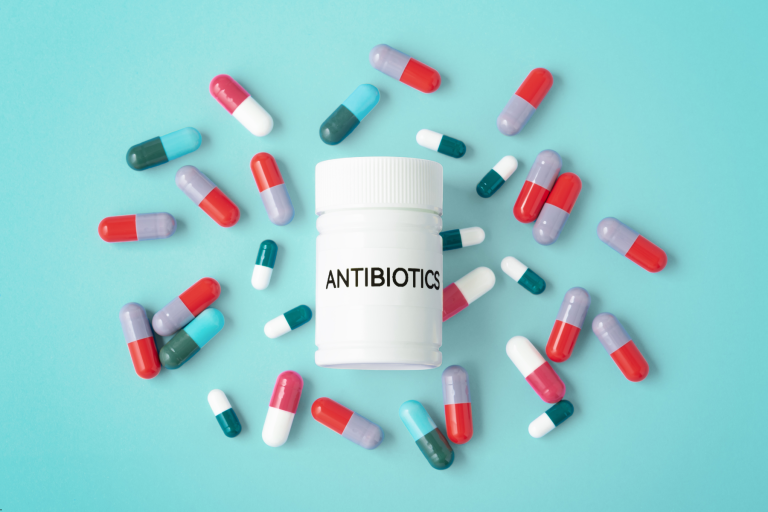
In September 2025, the International Federation of Pharmaceutical Manufacturers & Associations (IFPMA) published a new position paper addressing the possibilities of revitalising the antibiotic pipelines through pull incentive. The document builds on the outcomes of the 2024 UN High-Level Meeting on Antimicrobial Resistance (AMR) and its political declaration, as well as the biennial AMR Ministerial Meeting. It paves the way for progress ahead of the next UN High-Level Meeting on AMR in 2029.

In this instance, a central priority is establishing the necessary policy frameworks to stimulate R&D investment. However, there are still key barriers to antibiotic R&D and policy measures that need to be address. The IFPMA also highlights the urgent need for effective pull incentives to ensure a reliable pipeline of new antibiotics for patients and health systems. The position paper sets out a number of core principles for designing and implementing the proposed incentives.

The UK is losing positions as for investment in R&D

0

According to the new “Creating the Conditions for Investment and Growth” Pharmaceutical Competitiveness Framework published by the Association of the British Pharmaceutical Industry (ABPI), the UK is losing the race for investment in R&D, clinical trial delivery, and foreign direct investment.

The UK’s attractiveness compared to other countries has been evaluated using 48 competitiveness indicators as a benchmark. According to the report, the UK’s pharmaceutical R&D investment has underperformed against global trends since 2018. This slowdown has become more significant since 2020. In 2023, pharmaceutical industry investment in R&D actually fell by nearly £100 million. In the same year, foreign direct investment in UK life sciences was around 58% lower (£795 million) than in 2017 (£1,893 million). This is reflected in the decreasing ranking among comparator countries, dropping from 2nd in 2017 to 7th in 2023.

The ABPI Pharmaceutical Framework also indicates that the UK’s global ranking for commercial clinical trial placement has declined steadily since 2018 compared to other countries. According to the report, Spain has been the leading European destination for commercial clinical trials since 2020.

The Action Plan for the Chemicals Industry

The European Commission announced a number of new policies during the summer, including the Action Plan for the Chemicals Industry, which aims to strengthen the competitiveness and modernisation of the EU chemical sector. The plan focuses on solving key issues, such as high energy costs, unfair global competition and weak demand, while promoting investment in innovation and sustainability. The Commission also presented a simplification omnibus on chemicals to further streamline and simplify key EU chemicals legislation, together with a proposal to revise the governance of the European Chemicals Agency (ECHA).  

A Critical Chemical Alliance should be established to address the risks of capacity closures and identify critical production sites. The existing Import Surveillance Task Force should enhance its activities related to monitoring of chemical imports. 

Implementing the Affordable Energy Action Plan should help to reduce high energy and feedstock costs. The use of renewable energy should also be encouraged. Other announced actions include an Industry Decarbonisation Accelerator Act to support market growth and investment in clean technology, a Bioeconomy Strategy and a Circular Economy Act to boost the EU’s resource efficiency and chemicals recycling, and the launch of EU Innovation and Substitution Hubs to accelerate the development of safer, more sustainable chemical substitutes. The Commission has also confirmed its intention to minimise PFAS emissions through science-based restrictions while ensuring the continued use of PFAS in critical applications under strict conditions.

The use of titanium dioxide in medicinal products

On 5 August 2025, the European Commission published the Staff Working Document on the use of titanium dioxide in medicinal products, which was drafted by the European Medicines Agency. In light of the EMA’s findings, the Commission concluded that the use of TiO2 as a colouring agent in medicinal products (according to Regulation (EU) 2022/63 amending Regulation (EC) 1333/2008) should be maintained.

TiO2 is a widely used white pigment, currently present in approx. 91,000 human medicines and 1,600 veterinary ones. This excipient is often critical for protecting the active ingredient from light and degradation, and for enabling tablet dissolution. According to the EMA report, the removal of TiO2 would likely be feasible for less than 5% of the medicines. All 20 of the investigated possible alternatives were found to be inferior to TiO2. The EMA also stated that the same challenges would apply also to new medicinal products under development, and that capacity issues could arise for both the industry and regulators. This could lead to product shortages and withdrawal, and delay access to new medicines.

Furthermore, medicines without TiO2 would only be commercialised in the European Union and the European Economic Area (EEA), thus requiring differentiated supply chains, processes and dossiers to be available. The reformulation of individual products is expected to take between 4 to 6 years; the report suggested a transition period of more than 12 years.

The strategic dialogue with the chemical industry has started

The first meeting of the strategic dialogue between the European Commission and the chemical industry associations took place on 12 May 2025. The initiative aims to jointly identify priority measures supporting the competitiveness of the European chemicals industry, while also promoting sustainability, security, and safety. The chemical industry is often referred to as “the industry of the industries”, playing a central role in the availability of many raw materials used by other downstream industrial sectors. It employs over 1 million people in the EU.

President von der Leyen underlined the importance of the Clean Industrial Deal and the need to focus on four key pillars: mitigating high energy costs; improving access to capital; addressing the skills gap; and simplification. She also highlighted the importance of diversifying supply chains. An Action Plan for the chemical sector is expected by the summer, followed by a sector-specific Omnibus, and Chemicals Industry Package by the end of the year. Representatives of the chemical industry called for the swift implementation of the Competitiveness Compass, the Clean Industrial Deal, and the Affordable Energy Action Plan.

The European single market strategy

On 21 May, the European Commission published its proposal for a Single Market Strategy, aimed at supporting companies in developing their businesses while providing greater protection for consumers.

More specifically, the Commission aims to remove ten barriers that still exist to trade between EU countries, which are considered “terrible” because of their impact on the overall competitiveness of the European bloc in an increasingly complex global environment. The proposal also plans to modernise rules in certain key sectors, including construction, postal services and parcel delivery, and to simplify regulations for many services. A new definition of small and medium-sized enterprises (SMEs) should enable them to enjoy certain benefits typically available to SMEs.

Furthermore, the digitisation of processes should make digital filing the norm for companies required to comply with European regulations.

The ten key actions to break down barriers

The European single market currently has 26 million businesses and 450 million consumers, generating 18% of the global economy and €18 trillion in value for European gross domestic product. However, the single market is characterised by low productivity (around 1%), which impacts European competitiveness. According to the European Commission, completing the single market would double its benefits. In particular, the services sector alone contributes 75% of the European Union’s GDP, but 60% of the barriers are the same as they were 20 years ago.

In this regard, one of the ten priorities identified by the legislation is the definition of the 28th company regime. Furthermore, the sharing of objectiveswith individual Member States should see each of them appoint a high-level representative for the single market, known as a “sherpa”, responsible for promoting the application of the new rules and ensuring that national legislation does not hinder the completion of the single market.

Other simplification measures should impact public procurement rules and speed up the recognition of professional qualifications. The standardisation regulation should also be reviewed, with the possibility for the Commission to establish common specifications where necessary. The digital product passport is one of the measures planned for the packaging and labelling of goods on the market, with the extension and harmonisation of extended producer responsibility schemes for the end-of-life management of products.

A European market surveillance authority could also be created and authorisations and certifications for cross-border services could be harmonised. Cross-border mobility of workers could be facilitated by the adoption of an electronic declaration for posted workers and the coordination of social security. Finally, the strategy plans to develop new tools against unjustified territorial restrictions on supply, beyond the situations prohibited under competition law.

EuropaBio’s position on how to support ATMPs development

0

Advanced Therapy Medicinal Products (ATMPs) have represented the new paradigm in healthcare since the beginning of the new millennium. Cellular and gene therapies and regenerative medicine address the root causes of diseases and may allow curing patients based on just a one-shot treatment. This adds value for patients, their families, healthcare systems and society. While Europe held a leading position at the beginning of ATMPs’ development over 15 years ago, the EU attractiveness for ATMP development has declined compared to other regions, such as the US and Asia.

A position paper by EuropaBio summarised the recommendation of the industrial representative to support the role of ATMPs as a key driver of health innovation. According to the document, the EU must build on the historic momentum and ensure legislation focuses on accelerating the translation of science into therapies. Sufficient funding for innovation and a supportive legislative framework for biotech innovators of all sizes would be needed to realise the EU potential for ATMP R&D. The EU clinical trials ecosystem should also be improved by streamlining and speeding up trials. The unique value proposition of ATMPs should also be recognised, and sustainable integration of ATMPs into healthcare systems across the EU should be achieved.

EURLs, six new reference laboratories for public health

The activity of the first six EU reference laboratories (EURLs) for public health began on 1 January 2025. Each laboratory is organised as a consortium and will operate based on a seven-year mandate. The network has been established according to Regulation 2022/2371 on Serious Cross-Border Threats to Health and is funded under the EU4Health programme. EURLs will support the European preparedness capacity to identify potential threats to public health. The network will also support national public health laboratories, namely concerning comparability of data and laboratory methods. 

Each of the six EURLs is in charge of a specific area of action. The consortium on Antimicrobial resistance (AMR) in bacteria is coordinated by Statens Serum Institut (DK). University of Turku (FI) leads the Diphtheria and pertussis consortium, while the Legionella one is coordinated by the Hospices Civils de Lyon (F). The Vector-borne viral pathogens lab is led by the Rijksinstituut voor Volksgezondheid en Milieu (NL). The consortium on Emerging, rodent-borne and zoonotic viral pathogens is coordinated by the Folkhälsomyndigheten (SE), the one on High-risk, emerging and zoonotic bacterial pathogens by the Robert Koch-Institut (D). 

Further three EURLs will start operate later in 2025. They will be responsible respectively of Food- and water-borne bacteria (Statens Serum Institut, DK), Food- and water-borne viruses (Norwegian Institute of Public Health) and Food-, water- and vector-borne helminths and protozoa (Istituto superiore di sanità, IT).

Source: European Commission

Newsstand

  • Supplement to n.5 - October 2025 NCF International n.2 - 2025
  • NCF International n.1 - 2025
  • Supplemento to n.9 - October 2024 NCF International n.3 - 2024